Total Pageviews

Friday, 10 February 2017

The Flood

The flood

The city was Lucknow. The year was1971. It was monsoon time.

It had been ominously raining for days on end.
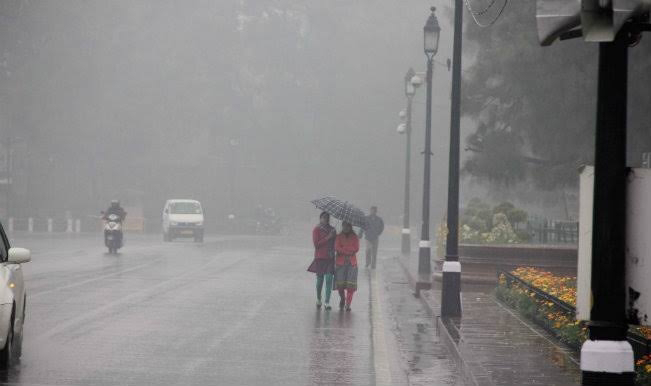
Water level in river Gomti had been rising rapidly and alarmingly for sometime. An embankment was protecting the low lying area of the city in the east.

One morning the enbankment could not withstand the onslaught of river  and breached in the area of the Butler Palace colony. The river rapidly spread over  the low lying areas . Panic spread as waters came surging in to inundate  houses and roads.

At the moment when a portion of the embankment gave way, a jeep was moving towards it in Butler palace area. The driver saw the water rushing towards the jeep  and  had barely the time  to reverse and race away from the approaching flood waters. "It was  race against time. We saw a high wall of water chasing us as we managed to escape" said an occupant of the jeep later.

In the nearby Butler palace officers colony a father was taking a bath when his children shouted him to come out. He wrapped a towel and came out to find water rising everywhere. He had no time to dress up. In his towel he rushed up to the upper flat as the ground floor was rapidly  inundated.  All the ground floor  occupants had to shift to first floor flats to save life. 

Authorities swung into action. Army evacuation boats came to the first floor flats of Butler Palace colony and elsewhere to move the occupants to safer places.

I had arrived from Allahabad the  day after the floods and was staying in a safe locality near clay square colony. I set out to see the havoc brought by floods 

The low lying areas in Hazratgunj and beyond were now under water.At Hazratgunj crossing

near the Allahabad bank the road was under water but the pavement at the corner shop of Benbows was  dry. I sat in Benbows for sometime, sipping tea and eating buttered toasts. I could get the view of the entire area outside from here. The low lying area of Narhi was now under deeper waters. There was lot of water on the road to GPO too.

I paid my bill and came out. skirting the watery road at the crossing I managed to walk along the long corridor of the Indian Coffee House building and then hired a rikshaw  to arrive at Nishatgunj  river bridge.

The brídge here was above water but the approach road was under more than  ankle deep water. we  crossed it in our rikshaw it and, crossing the bridge, we went through dry area of Nishatgunj market up to the beginning of Mahanagar. From here to the north, the entire stretch of mahanagsr colony was a vast ocean. we took a boat to row upto the secretariat colony where my relatives were then living in an upper flat. The lower flats here had disappeared under water. we rowed and I was level with the upper floors as I approached the flat of my relative. They stood in the balcony watching me and  told me that army boats were helping them get provisions from Nishatgunj market. . . . . .

. . . . . . . That was almost half a century back. Lucknow   subsequently got  far stronger embankments and river bed has also been desilted.   The city has further expanded into more low-lying areas and  has so far been spared another crisis of floods. The  memory of 1971 remains. . . . .!

***

Sunday, 29 January 2017

The Haunted Monkey Bridge

"The haunted monkey bridge"

I started paddling the #bicycle furiously as the approach to the bridge neared.

Paddling thus, I sailed over the mild incline and levelled up at the #bridge. The speeding bicycle shot across the bridge and went down the slope on the other side to cross the big iron gate of entrance to #Lucknow university. What a relief ! I was safe ! It was the first time I had crossed the  haunted #MonkeyBridge in the gathering darkness of an evening. and nothing happened to me !

Yes ! Monkey bridge was #HAUNTED. Thats what everyone said when I joined the university. Suddenly an apparition would appear out of the blue to drive daylight out of an unsuspecting wanderer. There were so many horror tales. Here is one:

". . . . . . .He was moving on the road towards the bridge on a desolate winter evening when a begger accosted him.

" God will bless you sahib. I have not eaten anything today. bless me with a  small coin and God will bless you with a fortune."

He found and took out a two paisa coin from his coat pocket. The beggar was all wrapped up in a soiled torn blanket. Now he unwrapped and  extended his hand.

What came out of the blanket was the huge leg of a horse, with a hoof touching his hand.

He panicked  and started running away. He saw a tonga ahead. He shouted at the tonga to stop.

The tonga stopped abruptly and he jumped to the rear seat. He asked the tonga driver to drive away fast. The tonga picked up speed.

"What is the matter #sahib ? you seem to be very agitated "

He narrated the frightening experience to the tonga driver.

" . . . and Í saw a horse's leg coming out of the blanket " He concluded.

" My God", exclaimed the tonga man, " was it like this .."

The tonga driver extended his arm towards the rear of the tonga where the man was sitting.

. . . And it was a huge leg of  horse  before him, the hoof prodding him. He looked up at the tonga man's face and saw a sneering horse's head there staring at him!

He shrieked and jumped out of the racing tonga, fell on the road and fainted . . . he was rescued  moments later by a #chowkidar (security patrol) on the night beat. . . "

That was one of the many stories going round when I joined the university.

Monkey Bridge, also know as #Bruce's Bridge, was built c.1866 to cross the Gomti River linking Lucknow University on the northern bank to the Chattar Manzil on the southern bank.
"There was formerly a bridge of boats here; the present bridge was built in 1865, and completed in 1866, under the superintendence of Mr. Bruce, the Municipal Engineer." (archive)

Towards the begínning of 1960s it was decided to replace this narrow, low, flood prone ageing Monkey bridge with a sturdy new four lane higher level bridge. The 'haunted' bridge was to be demolished.

Construction work started. The pillors of the new bridge, however, kept developing defects endlessly and there was no progress for quite some time to the utter desperation of  the engineer-in-charge. Then one night, as the story goes, the engineer was visited by a holy man in his dream and was advised to construct a temple of the monkey God Hanuman on the river bank at the site of the new bridge.

A small temple of hindu God Hanuman ji came up soon

and it was followed up successfully by a new imposing #HanumanSetuBridge.

The Ghosts of monkey bridge, if there were any, disappeared.
And the #GhostStories are no longer heard. . . .

*


Saturday, 28 January 2017

LUCKNOW CALLING : The Ghazi-Uddin-Haider Canal


"LUCKNOW CALLING : The Ghazi-Uddin-Haider Canal"

A wide open drain runs through  the outskirts of Lucknow zoo and enters the Raj bhawan estate. Cutting across the north eatern edge of the estate,

it runs  along the back of Mall Avenue and Purana Quila. Then it turns south, cutting across the station road and going  to chhitwapur, further into the Charbag area and beyond. This stinking, slums infested, drain is famously known as Gaziuddin Hyder canal.

Lucknow was an insignificant place in north India until Asaf-ud-daula, the wazier Nawab of Oudh
moved his capital from Faizabad to Lucknow. And then a metamorphosis  started taking place.


A little later  Ghazi-ud-din Haider, the first Nawab Wazier, who had been  raised by Lord Hasting to the dignity of King of Oudh in 1818, assumed the reins of power. In his time Lucknow   became a great  Imperial city of the Nawabs. Gaziuddin Haider   facelifted the city with landmark buildings - among them being the majestic Chattar Manzil, the Mubarak Manzil and the Shah Manzil in the Moti Mahal complex . He also constructed the tombs of his parents, Sadat Ali Khan and Mushir Zadi Begum.  For his European wife, he constructed a European style building known as the Vilayati Bagh. Another creation was the Shah Najaf Imambara (1816),

his mausoleum, on the bank of the Gomti. This mausoleum was a copy of the fourth Caliph Ali's burial place in Najaf, Iraq.

The Canal was indeed the most ambitious project undertaken by Ghaziuddin Hyder. The idea was to construct a link canal that would  connect the river Ganga in Kanpur with the river Gomti in Lucknow. A canal was constructed across the heart of the city but had to be abandoned subsequently due to faulty engineering, the gradient being defective, defeating the purpose for which it was intended.

Having failed to link the Ganga,  the Canal came to serve the purpose of the main arterial drain into which smaller drains  from various colonies of Lucknow empty their muck as it flows into the river gomti. In course of time it accumulated lot of filth and acquired a distinct stink . Unauthorised hutments cropped up along the canal leading to sprawling dirty slums.

A few years back a drive to beautify the city took place. As a result  of this programme, a long stretch of area lying along  the back of Mall Avenue got face lifted.

Slums were cleared and  a neat wide flyover was constructed above the canal. The area was beautified with lamp posts , flowering trees and shrubs and side lanes. (see photos).  The idea was novel and besides transforming the dirty, slum infested, nala area into a nice neat stretch it vastly eased traffic congestion on the busy havelock road.

The legacy of Ghaziuddin Hyder has, thus,  acquired another, modern,  identity -The Ghaziuddin Canal Flyover - giving a fresh lease to the legend of the Lucknow Nawab !

**


Wednesday, 11 January 2017

The Tehsildar

"The Tehsildar"

The training had started.

It was some kind of a practical district training - getting attached to various functionries of the district administration  from the tehsildar to the district magistrate, to get a feel of the tasks they perform and getting an idea of how the government works at the cutting edge level.

I was attached to Tehsildar first and reported at 10 o'clock sharp at what was known as his 'Chamber'.

The  modest size 'chamber'  had a big green rexine topped office table there with a comfortable swivel chair on one side and four simple chairs on the opposite side.  The Tehsildar's chair was vacant.

I waited the whole day . Tehsildar did not come.

Next day I had some books with me - the various manuals like the Taqqavi Act, the Cr P C. I studied these.

The Tehsildar did not come.

In the next two days also, the Tehsildar's chair remained unoccupied.

On the fifth day as I was scootering down to the Tehsil office, I decided to visit the District Magistrate on my way. He was responsible to the central government for my training.

"So how is the training going? " He enquired pleasantly. He was an affable old chap.

" I am with the Tehsildar, Sir,  for the last four days, " I replied "reading the various manuals"

There was a note of disapproval in his eyes. "That you could have done in Delhi itself. No need to have come here. What is the point of coming to a district if you don't get practical experience" he observed sarcastically.

" That's exactly how I feel sir" I replied cooly, " but that is the only thing I can do to utilise time as the Tehsildar has not come to his office for the last four days".

The obvious happened next. He phoned the  tehsildar and gave him a thorough dressing down.

" you can go to his office now.", he said replacing the phone, "He will be there today" .

I found  the tall and hefty tehsildar in his chair as I entered his so called 'Chamber'. He had some kind of resemblance to the hollywood 'western' actor John Wayne.

I greeted him.

He ignored my greeting. I could see that he was seething with anger but could not direct it towards me.

He rang the call bell and the office boy rushed in.

" Where is the ameen? Useless fellow. Ask him to come immediately" he shouted.

When the Ameen came he barked at him for a few minutes, unloading his pent up wrath.

He then called the Naib Tehsildar and shouted at him too for quite sometime. He looked at me for effect. I gave a bored expression.

He called quite a few other subordinates and went on with the shouting game. He kept looking at me all the time to gauge my state of mind.

I sat there with an expression of intrigued disinterest. why was he behaving in this manner, I asked myself.

He had called another chap for his dressing down drama but the bloke was absent. As he sat there waiting, keeping himself in readiness to explode on the bloke , I got my chance.

" Do you have this combination of Sun, moon and mars in your horoscope?" I asked him suddenly , explaing the combination.

He was taken aback. This was the last thing expected  from me.

There was now a metamorphosis. He looked stunned for a while and then he gave me a disarming smile, relaxing.

” Yes I do have. But how did you know?". He was curious.

"I guessed.The way you were shouting at your staff meant that it was most likely" I replied in a friendly tone.

The bloke he had been waiting for, now entered. But the drama was already over.  No more shouting.

" You should come to office in time, son. " He said patronisingly to the nervous young man, "See, we have a guest here. "

The chap now noticed me and gave a resounding salute which I acknowledged.

" That's better. Now get some tea and good biscuits please" the Tehsildar instructed him, "and ask the driver to be ready with the jeep. We are going for inspection of a village in an hour"

I had a most lively and instructive practical experience of how a Tehsildar works, in the days that followed. He took me to neighbouring villages and showed me how he settled land disputes, how a field was measured, what crops were sown and how a green manure of fast growing DHENCHA weed is used in the interval between the two main crops to revitalise the fields.The tehsildar was an efficient and popular person and saw to it that he made up for the lost four days!

The district magistrate was very much pleased to see the progress of my training and attributed it to the way he had pulled up the Tehsildar.

I knew better ! (And you too now, don't you ! ).

The stars had a role !!

**


Tuesday, 10 January 2017

Once upon a time in Allahabad

"Once upon a time in Allahabad"

First came the musical chimes - one chime, loud and clear, for each quarter of an hour. Then came the powerful gongs that set the skies vibrating for miles around. Eight gongs in all, as I entered new katra colony at eight o'clock  on my first morning in Allahabad.  Welcome to the University of Allahabad !!

Yes that was the welcome note to my arrival at Allahabad university several decades back.  The powerful clock tower was on the top of the majestic, red roofed yellow stone Senate Hall in the Arts faculty campus. This clock had been supplied by the manufacturers of the London Big Ben and was a perfect copy of the famous clock.

As I look back through the mist of time I see the university road connecting the science  and the arts blocks. There were several shops on either side of the road, some were book shops and  there were at least two restaurants.

Towards the Sir Sunder Lal  Hostel side the last shop was a restaurant cum  bakery of Bhat ji. That was two shops after the barber's shop.A young man from there carrying a big tin  box in the carrier of his bike used to come to our hostel in the afternoon. There were fresh buns, butter, pastries and  loaves of bread in the box

. We either paid in cash or noted the amount in a long narrow book that he carried, to settle the payment at the end of the month.

Somewhere in the middle of that small market was the popular Jagati's restaurant, its owner, Mr. Jagati always in a Gandhi cap over the western dress.  It was usually fully packed at lunch time with students and others. I believe that it is no longer there.

The corner shop at the crossing towards the science block was a general merchandise shop run by two almost identical looking  young brothers.

They stored almost every thing a student required. When nylon was first introduced, this shop was among the first to sell somewhat expensive pure nylon socks which were tough enough to last for ever! The cotton socks used to wear out within weeks.

From this general merchandise shop crossing,  there was a road towards the Anand Bhawan. Right at the  beginning was H D Pant tailor's shop. At a little distance, close to the Diamond Jubilee hostel , was a corner tea shop run by an old woman.

The shop was popularly known as "Buria ki dukan"(old woman's shop. She offered some ready made snacks and good quality tea. A tasty, spicy "mixture" of puffed rice and various "dals" was popular with students, most of whom were on shoe string budgets.

The Arts block side had the stately grand Senate Hall.


The science campus  consisted of  yellow stone buildings of various departments and one could locate  the chemistry department by the pungent odors of various gases including H2S emanating from there !. The university's cricket ground, hockey and football fields as also the squash and tennis courts were located here in the  ample open expanses. There was also  that timeless stately Muir tower.

The campus was very  clean.Plastic desposable shopping bags and plastic bottles had not yet arrived and the menace of plastic garbage was blissfully missing. All  food in the hostels  was organic as the use of fertilisers and pesticides had also not begun. The air was  clean. The menace of smog came later.

That was way back in the past. But the gongs of London's big Ben at the start of  BBC news still keep resurrecting the  memory of my days once upon a time in Allahabad !

                            ***

.

Monday, 5 December 2016

SKY full of stars


There is a  faint star formation called  "seven sisters"


You can't possibly see it with naked eyes if you live in a modern polluted  city. Decades back, when the cities were not polluted one could see this costellation in the night sky on a moonless night. It is the in the northern sky. 

In the northern skies there is  another constellation of seven stars called great Bear or Ursula major. In India it is known as Sapta Rishi. This is brighter and bigger.

It is brighter than the Seven Sisters. There is a faint star next to the second star of Great Bear tail. You can see this on a clear night only if you have perfect vision. This dim star is known as "arundhati".

Summer is the time of nature's fury in the plains of India as the Sun scalds everything at a hundred and ten plus temperature during the day. But summer nights in the open are generally pleasant .

We always slept outside in the summer, in the inner courtyard, in my childhood. There were light cots for sleeping outside. These cots were placed on  a raised cemented platform known popularly as Chabutara.

It was in those days that I came in contact with the limitless and timeless universe. My father had a phenomenal knowledge of the skies and he was my encyclopaedia during my early years. From him I learnt to identify the planets of our solar system, the stars and the constellations.


 In the western sky there was that constellation called ORION HUNTERS  with the belt of three bright stars.

The Milky Way  sweeps across the sky , from the southern horizon to the northern. It is  faint, like a hazy white dust. 

Ancient sages of India had not only identified all the planets of the solar system but had accurately measured their distance from Earth, their circumference and their diameter .it was a mind blowing feat. The details of this and much more are given in an almost two thousand years old book SURYA SIDDHANT. 

Gone are the days of night sky watching because of high pollution and very bright lights of modern cities. Twinkle Twinkle Little Star has the meaning for the children of today !

***


***

Wednesday, 30 November 2016

My rear view mirror

Memories came flooding back as I sat at the main gate, watching kids going to the nearby  school.

I was transported back in time,  finding myself a three year old  in the hill town of Nainital. I saw myself sitting in a room where grown up people were busy getting ready for the group photograph.

I was feeling a bit ignored. My maternal uncle had come back with his bride and we were  going to have a group photo with the married couple.. Everyone was dressing up fabulously, particularly the two young  girls -  my youngest aunt and the eldest cousin sister who were dressed up in fabulous maroon silk sarees.They were both fifteen years old.

I just sat waiting impatiently . And then someone attended to me. She also made a pony tail of my hair and took me down the huge steps into the open ground for that family  photograph . I don't remember anything else. . . .

Thus I sat at the main gate, having time travel and watching tiny tots  marching to the nearby school.

I  tried to recall more of my  childhood and  I found myself in the carpeted office room of the good old Headmaster of our school, a six foot tall stern Rai Bahadur. He was punishing my school mates one by one and and I was the last one in the row. we had been caught with our dresses full of wild colours on the school day preceding Holi festival. We had been warned not to play colours in the school.

I was the smallest of the offenders brought to him.

He raised his cane over my head as he stood towering over me and I braced myself for the pain. He stopped and lowered the cane and stared at me.

"No , he is certainly not one of them. Somebody seems to have smeared this boy with colours " he mumbled. . . .

I was spared. . . .But after the school's last long bell as I  raced out  of the premises I was caught again by those bullies and this time they did the real job, smearing plenty of black oily paint on my whole face. It made me look like a man fresh from Africa and my mother got terrified when I entered our house.

I forced myself to go back to the hills again in this memory rewind. There came a clip of crossing a shallow rivulet on our way to grandfather's village house in Mala in the hills of Almora. Someone was Carrying me in his arms. I have memories of a fine three storey house and a large drawing room with wide windows, of the smiling face of my grand father and of coming across a dog much bigger than me on my way up that hilly footpath that led to the house. I must have been four year old then.  A little later I came back to the village again to attend a marriage. I remember sitting in the courtyard under a walnut tree eating a sumptuous lunch.

Next I see myself on the Mall road in the hill town of Almora, walking towards the Brighten Corner to visit someone  in the Cantonment area.  There were plenty of huge deodar trees all around and the breeze whistled through them all the time. Almora was such an uncongested and green hill town in those days !

And then I am back  to our childhood house with a sprawling compound in the planes of U.P. We were playing cricket in the winter vacation. I was batting. I  recall Ramdev, a school friend,  bowling to me. As he prepared to send the next delivery, out of nowhere his father popped up, slapped him hard and led him back home, muttering "playing, playing, playing  all the time.  Never study". I can still see that hurt in his eyes.

I am suddenly brought back from the reverie by the blast of the horn of the enmpty yellow school bus moving out of the school. There are no kids on the road now. Classes seem to  have started. . . . .


The ultimate riddle

The ultimate riddle.

In another fifty years science is likely to discover that all living beings on this planet have an electro magnetic   relationship with the other planets of this solar system and the constellations beyond.

The real scientific age is barely a hundred year old  but is progressing at an awesome  rate.. From the first aeroplane to first landing on moon took  just six decades or so ! The time for a quantum jump in scientific discoveries is just round the corner.

The ultimate riddle to solve for science is the limits to which electro magnetic fields from each object affect and alter other body masses. The whole universe is nothing but a fierce interplay of matter and energy known to the ancient religion as Shiva's. Tandav.

Yogi Ram Charak (He was interestingly an American) was ridiculed and insulted by scientists when he maintained in his timeless 1904  book that the human body has an electronic magnetic field. It was only in 1954 that scientist discovered that the human body has indeed an electro magnetic field..

( This 1904 book of yogi Ram Charak,:"FOURTEEN LESSONS in Yogi Philosophy and Oriental Occultism " , can be downloaded free from internet.)

Science is correcting itself fast as new facts are unravelled. The creation is unique. No two persons have the same finger prints as each one is an inimitable unique piece of creation in TIME and SPACE  syndrome as  each one is spaced out from others by TIME and PLACE of his/ her birth in the rapid  kaleidescopic shifting of planets and constellations.

The ancient civilisations seemingly solved the riddle of the universe but were obliterated in a deluge (known as a PRALAY in Hindu philosophy in unending cycles of creation and destruction).


Wednesday, 16 November 2016

Random Reflections

Random Reflections
- the child's world

How far back in time did you leisurely spend some time lying on your back in your backyard or a park bench, looking at birds as they flit from a plant to another, or butterflies as they sit on a green leaf, ever so busy? How far back in time did you gaze at the deep blue sky, with those tiny white clouds scudding across, continuously making new patterns and shapes, with  kites flying 'up above the world so high',  gliding leisurely at that great height, their wings spread wide apart? How far back in time did you last  closely watch  an army of ants at work on the ground, carrying bits of  grains of sugar or cereal far too big for them, always in a neat unbroken line, always disciplined? When did you last watch that tiny cut in your skin caused by a thorn as you worked in the rose garden , and  how it bled for a few seconds and then, automatically,  a transparent film formed over the cut as the healing process began?

Most of us have no time for all these matters. If we are not busy with professional work we are busy with our cell phones or that idiot box. But we  have done all this in our childhood days, the time when we were growing up and constantly educating ourselves, constantly learning new things.

The way a child learns new thing is amazing!
 

Thursday, 3 November 2016

Nayyars Restaurant

"Nayyar's Restaurant"

I ordered an #upma. It was served steaming hot. The service was excellent and the place was crowded.

I had to share a table. The man on the other side of the table was hurriedly eating a thick onion tomato uttappam.

He appeared to be very hungry. He had already ordered a masala dosa too and the boy brought it just as he was finishing his uttappam so he continued eating non- stop.

I finished the deliciousupma and looked at the boy with that gesture of 'what else'. He suggested that I could try an idli. I said 'yes'.

Coconut chutney that was served with upma and idli was very tasty and fresh. Tea was an excellent Nilgiri variety.

I thoroughly enjoyed this evening tiffin on my very first day in #Nagpur. The place was very close to my office in New Secretariat Building.

The proprietor was silver haired Mr. Nayyar, a fine old gentleman of an infectious smile. I instantly liked him as I went to his counter at the entrance to pay my bill. He observed that I was a new customer'.

Of all my favourite restaurants of my younger days Nayyar's restaurant was by far the best and also the cheapest in tarrif. It was located next to the Liberty cinema building.

Some well known nearby places were the Indian Coffee House and the Bishop Cotton School.
That was a very long time back, in the late sixties. I wonder if Nayyar's restaurant is still there !

Sunday, 23 October 2016

The load of baggage

As we travel through life ,we carry with us the baggage of the past, of real and imagined wrongs done to us. The load keeps increasing as time rolls on.

Imagine carrying a load of heavy boxes  on your back everywhere you go. That's what we do to our brains by carrying bad memories of the past.

Meditation teaches us to shed this baggage. It teaches us to learn the golden rule of forgiveness . The lesser the baggage we  have, the easier will be the travelling into the future.

Sunday, 21 August 2016

Talking point

" TALKING POINT""

Once upon a time I worked as P.O. in a bank  in west Bengal. I did not, then, know bengali and was trying to learn it fast and this endeared me to the bengali staff there. So one day as I was busy learning the ropes in a cash payments counter, a dada (friendly staff member) affectionately offered me a goldflake cigarette and asked "dada aap ekto cigarette khayiega?" (would you like to eat a cigarette). I was amused. I said "dada, cigarette to peete hain, khate nahi". He laughed and said "cigarette is not a liquid. How can you drink it?"

You can see that  both of us had a valid point of view.

You come across lots of strange things when you  study  languages. and meaning of words. This study is called SEMANTICS.

In Bengali "khaben" covers both eating and drinking. " Mishti khaben" is Ok and so is "Jol khaben". So while a man of the north "drinks" a cigarette, the man in the east "eats" it! An Englishman who "smokes" a cigarette would find it amusing.

If you are a north Indian,  you can pick up bengali early as the base is sanskrit, in common with hindi. The problem is only with the pronunciation. "jal" (water) becomes "jol". Most words have a O pronunciation in place of A. So "khabar" becomes "khobor".

I find that this particular shift in pronunciation has something to do with the region. In the entire east the first letter of  hindi alphabet (अ) "a" is pronounced as   "au" ( as in "awe") but as you move westward the accent gets changing. In Bihar the accent is still "gol gol - round" but not so pronounced as in Bengal.
In lucknow it further changes and so in Ambala as we move west. "a" of hindi alphabet  is not " au" (as in AWE) in lucknow - it is "a" as in "fur". In the west beyond  Haryana it becomes "aa" as in "carry". So "Kah rahe the" of lucknow becomes "koh rahe the" in Bihar and "keh rahe the" in Ambala.

That reminds me of G.B.Shaw's PYGMALION where  Professor Henry Higgins claims that he can tell which part of the country a man has lived by simply noticing the way he pronounces words. To some extent I can also place a man's hometown the way he pronounces hindi words.

Sometimes this shift in pronunciation conveys an altogether different meaning as is evident from the following :

A Bengali gentleman once invited his Lucknow wala friend to his house. He said " Dada aaj raat me humre ghaur pura family ke saath bhojan karne aiyega" (please come to our place at night for BHOJAN with your whole family").

Now this lucknow wala literally took it as dinner ("bhojan")  though the bengali gentleman meant "bhajan" - a religious hyme singing event. He  visited his friend and returned stark hungry!

We should try to have some working knowledge of languages of other regions of India too. It is generally a pleasant experience.  Long time back in a South Indian restaurant in Lakshmi talkies premises in Allahabad, I met a nice young manager from Tamilnadu  so I would greet him with a loud "Vanakkam" and then  order "irantu kapi, irantu dosa" for me and my cousin. He became a friend . I also used to  asked his south indian  waiter to "tanni kontu" to his  delight as no one in Allahabad spoke to him in his language.

But a word of caution is necessary. Be sure of the meaning of what you say by either keeping a language primer of the language or by checking it up with a friend of that region otherwise there may be an occasional embarrassment.

A friend of mine having poor knowledge of english  once complimented an British lady married to an Indian doctor. She was a sharp witted (Tej buddhi) lady so he said, "madam you are a fast lady" which was a derogatory remark and caused an embarrassment !!

So move cautiously as there may be some landmines too !!"

****


Saturday, 23 July 2016

THE OLD HERCULES BICYCLE

"The old Hercules bicycle"

Sometime after the year nineteen twentynine   my father acquired an imported Hercules bike. He was then doing his BSc  at Allahabad University.

He was the first one in the family to go to Allahabad University for his BSc. Subsequently, much later, my uncle also went to Allahabad university for his BSc. and MSc. I was the last one in this line to be a student of  this (then) prestigious university.

The imported Hercules bike was purchased for a  princely sum of  rupees twenty seven and eight annas! (You will get just 250gms of the cheapest dal for this amount today !)

Rupee had great value then. Those were the days when pure desi ghee was sold in retail for about ten annas (about 65paise) per kilo. An imported new T- model ford car then cost just three thousand rupees !

The bike came complete with accessories - a tools kit, an oil lamp, a bell, a career,  a chain cover and an small air pump that was hooked to the main frame. It was a  sturdy bike.

One day, early in his cycling days,  he was cycling down the  campus road of the Science block (known as Muir Central College) with his hands firmly placed on the handle  when he saw one of his science professors walking towards him from the opposite direction. Just on impulse, out of reverence, he lifted both the hands off the handle to do a quick namaskar. The idea was to quickly regain the handle. He could not and he lost balance. The bike crashed, throwing him on the ground. It was an anticlimax which he never forgot.

It was then that he decided to learn the art of keeping the bike moving with his hands off the steering handle. When I was a child he used to show me lot of bicycle tricks and I yearned to acquire a balance in cycling as early as possible. The opportunity to have exclusive use of this bike came sooner than expected.

Soon after the end of war father purchased a second hand motor car. It was a light brown coloured dodge. The deal was bad as the car proved troublesome. He replaced it after sometime with a second hand green  land rover which was a perfect driving vehicle.

The bike now became a general purpose  bike for our house as father stopped using it. It was then that I, as a kid,  got hold of it and started practising  'run with the bike and jump on the paddle' to arrive at that divine moment when you keep moving without losing balance. It took considerable effort and lots of injuries. After I acquired the balance  I continued with what was known as the KAINCHI  style cycling - left foot on the left paddle and right foot, through the frame on to the right paddle. I was then too small to reach the saddle of the bike!

So many other relations who came to stay in that house in Gorakhour  learnt cycling on this bike. These included Sri Basant Ballabh Pant, Sri Devi Dutt Pant (khal khal ji), Brahma dutt Joshi, Mohan chandra  Pant, Nilamber Joshi and many others whose name I do no now readily  recall. The bicycle withstood all the hammering that results from multiple falls at the hands of those trying to learn cycling. It  was indeed a very sturdy bike.

The bike continued to serve me well during  my years in Lucknow university hostel. Unlike Allahabad university hostels,  lucknow university hostels  were located deep inside the campus and at considerable distance from the main road where public transport was available. The bike gave me great mobility.

For some time more  after my university days I continued to use the bike. It saved me considerable money in transportation.

Then came my brand new scooter and I abandoned cycling.
For a long period the old bike remained forgotten,  resting against a wall without use.

I  finally gifted it one day to one Gopal Singh who lived in our out house. . . . .

(Girija n. joshi)

Sunday, 17 July 2016

Memories of the Gkp house


See the photo  below.


This photo resurrects memories. Let me try to recall. This photo was taken in 1953 with a brownie reflex camera.

The box camera was purchased that year for Rs.45/- at Nainital. 

In the background of the photo  is a beautiful bungalow. This bungalow  was earlier a small and non- descript one, with minimum construction, and it belonged to a British lady until it was purchased somewhere in middle of nineteen  thirties by Babu Lalji, a wealthy landlord of Gorakhpur. For a few years preceding the transfer of my father to Gorakhpur it was occupied by a Treasury Officer. It was an ordinary house then. 

When my father was transferred to Gorakhpur , he arrived at this house in a tonga hired at the railway station. Those were the days of horse driven carriages.


The house  was a plain looking badly maintained property. There were four main rooms, a drawing room, a dining room and two bedrooms.with a distant and unconnected kitchen. It had a big compound on all four sides of the house  with wild unchecked growth. There was no compound wall at all, only a rusty barbed wire low fence ran around, with a small wicket gate in the from mid area.. The backyard  was without fencing and from the wild  bush- infested field beyond it, jackals used to enter the backyard of the house at night. 

My father persuaded the landlord to make major additions to the bunglow and agreed to pay an increase in rent. So a strong brick boundary wall came up all around. On the long front boundary wall, father trained pink and violet flowering creepers which soon covered the entire front boundary wall with riots of pink and violet flowers. A  big  iron gate was fixed at one end of this front wall. From this gate a semi-arc of a red gravel driveway was constructed which ended at a new constructed portico (there was none before). On the outer pillors of this wide portico red bogunvillia were trained which went right up to the roof.

White chandani flower plants were planted on both sides of the driveway with a few RAAT KI RAANI fragrant flowering plants in between. These had to be trimmed after each monsoon season to keep then in shape and flowering. 

A major transformation was in the extension made to the bunglaow. The front and the inner verandah were widened and sloping red-tile roof was added to the extended verandahs giving a picture postcard look to the bungalow. New rooms were added on the right hand side going back right up to the then unconnected kitchen. 
   ( At the back is the kitchen and pantry block). 

The newly added construction consisted of  one  large guest room, then a big pooja- room, then a flight of stairs to the roof then an independent one room and a kitchen and bathroom set and a separate small courtyard set. All these opening into a long wide running verandah right up to the kitchen. A set of servants' quarters were also added, separated from the main inner courtyard. Bael, Mango and Jamun trees were planted in the backyard. In the middle of the front lawn and inner couryard a big circular raised CHABUTARA each was constructed . In the summer we used to sleep in the open on the inner courtyard CHABUTARA.

Many of our relatives came and lived in the guest room of this bungalow for short or long periods. In the separate independent set one Sri Jagannath Bhatt lived for a few year. Then one Sri Devi Dutt Pant  (Khalkhal ji) moved in. 

That was a long time back.  I hear that the bungalow has now been demolished and a College has come up in that vast compound.

***

Friday, 15 July 2016

TRAMS

ROMANCING WITH TRAMS

ऐ दिल है मुशकिल जीना यहाँ
ज़रा हट के, ज़रा बच के
ये है बॉम्बे मेरी जाँ
कहीं बिल्डिंग, कहीं ट्रामे, कहीं मोटर, कहीं मिल
मिलता है यहाँ सब कुछ, इक मिलता नहीं दिल . . . . . .

That was  a song in film CID (1956) .  . . . .[singers: Rafi and Geeta Dutt].

Yes , कहीं बिल्डिंग कहीं ट्रामे . . .

Trams have a history going back to ancient Rome. Rome was under control of Augustus Ceaser  when in  BC 27 the first tramcar appeared . It was  built by Franciscas, a Roman citizen. It was a car for six persons  made of wood and was pulled by horses on rails made of bronze. This tram system survived for approximately 500 years.

Then came the dark ages and progress of civilization was interrupted for hundreds of years until the renaissance.

Slowly the idea of trams came back. And with the introduction of electricity trams bacame more popular.

Once upon a time there were trams in many cities of  India - in (then) Bombay, Madras, cawnpore, Patna, Nasik, Delhi and, may be, some other places too. They gragually vanished in the fifties and the sixties. Only calcutta still continues with these old trams.

Else where, in Europe Trams are very such there  but in an altogether new Avatar -  thoroughly modernised and fast.

Mumbai is now considering introducing these super fast trams to the city.

Sunday, 10 July 2016

THE CURIOUS CASE OF A CLAIRVOYANT SAINT

THE CURIOUS CASE OF A CLAIRVOYANT SAINT

Scientists contemptuously reject anything that cannot be proved by the existing yardsticks of science.. As an extreme case we see science rejecting the existence of God !! Science is as a matter of fact still in its elementary stage. It is still to find the truth regarding many things.

As a case in point let me remind that scientists scoffed at Yogi Ram charak when in 1904 he claimed (see his book "Fourteen lessons in yogi philosophy and oriental occultism" available free on net) that human body had an electromagnetic field. It was only in nineteen fifties that science discoveted that this was indeed true!!

There are so many persons, unknown to the world who have extraordinary supernatural powers that science cannot yet explain.
Let me narrate an interesting incident giving an idea of the evidence of such powers. It happened two decades back in the case of a senior police officer posted in kumaon hills.
This gentleman, an upright and very bright police officer was expecting a promotion that year. One of his friends in Delhi was to let him know as soon as the orders got issued.

That day, more than two decades back, I was having my early morning cup of tea when the call bell rang. On opening the front door I was surprised to find this gentleman standing outside, sleepy eyed and dishevelled. He had travelled through night by road from the kumaon hills to Lucknow.
After an exchange of greetings the first thing he said was, "I want to see your Pundit Paramhans Misra ji immediately. I have been superseded".

This Pt. Misra was not a senior bureaucrat of the Govt. He was working in UP Govt. department of Irrigation. He lived close to my house. we went there.

We arrived there at eight o'clock morning and were ushered in as there were no other early mornings visitors. After paying respects to him we sat down before pundit Paramhansa Misra.

I had been visiting Pt. Misra off and on for almost two decades prior to the visit and he knew me well. But this gentleman was a new face. So I introduced him.

The first thing Pt. Misra then said on being introduced was :

"congratulations on your well
deserved promotion."

The gentleman was completely taken aback.

"Pundit ji. it is just the other way round. I have been superceded", the gentleman said.

The gentleman then explained how his friend in Delhi was informing him of the developments and how the news of his being superseded made him rush to see panditji.

Panditji brushed this aside with a wave of hand.

He said , "That was ofcourse earlier , at 6 pm. But the file was recalled at the next higher level at 9 pm and the orders were reversed. You have now been promoted. There is no doubt. You can celebrate !".

He even told the name of the officer who reversed the earlier orders!

The first thing we did on return to my place was placing an urgent Trunk call to the Delhi based friend of his. There were no mobile phones then!

On contacting, this Delhi based man burst into excitement , "where have you been? I was trying to speak to you but was told that you had left for Lucknow. Something strange has happened here . Your file was recalled and the orders have been reversed at a higher level. You have been promoted. Congratulations"

"What time were the orders reversed?"

" At about 9 o'clock night"

My experiences with Pt. Paramhansa Misra prove that science is still in its elementary stage so far as explaining these phenomena are concerned.

That reminds me of what the great scientist of Sir Isaac Newton once observed : (QUOTE)

"I do not know what I may appear to the world, but to myself I seem to have been only like a boy playing on the seashore, and diverting myself in now and then finding a smoother pebble or a prettier shell than ordinary, whilst the great ocean of truth lay all undiscovered before me.
— Sir Isaac Newton.

Yes! The great ocean of truth still lies all undiscovered before Mankind!

Thursday, 2 June 2016

SAVE NAINITAL (नैनीताल बचाओ)

"Nainital Bachao"

It is good to have a clean town. What is more important is to have a safe town.

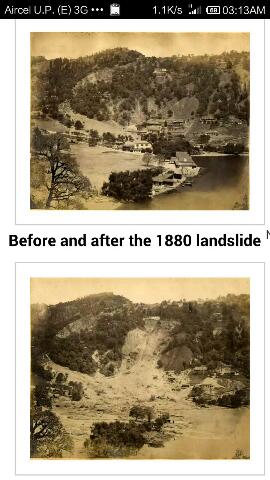
In 1880 a tragedy struck Nainital when Alma Hill collapsed in unusually heavy rain due to haphazard construction  activities and bad drainage system. Lot of people died.

FLATS was created where the rubble of Alma hill was.

After the tragedy many reforms took place for the safety of the hills. An excellant drainage system was  introduced. Building laws became strict.

That was more than a hundred years back.

We are facing another tragedy if :

1) present manner of construction activities continue.
2) Drainage system from the top of the hills is not properly maintained and fortified.
3) unrestricted movement of motorised traffic within the town continues.

It is time all vehicles including VIP vehicles are banned within the town except for one hour each in the morning and night. Only Electric three wheelers should be used and a decent, reliable and affordable  public transportation system maintained.

There is lot of space for extension of building activities beyond SUKHA TAAL area on the other side of the hill. There should be complete ban on further construction in this side of Nainital. Let there be a NEW NAINITAL beyond Sukha Taal on road to Kurpa Taal and hills around.

Unusually heavy rainfall is predicted for this year. It will be a testing time for the town.

Friday, 13 May 2016

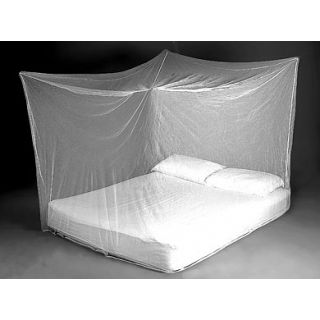
मच्छरदानी में आदमी

कल रात बड़ी समस्या हो गई. मच्छरदानी लगा के सो गया था पर कई बार नीद टूटी. हाथ पैर में मच्छर काट रहे थे.

होता यह है कि अक्सर हाथ पैर मच्छरदानी से चिपके रहते है और मच्छरों की बहार आ जाती है. बाहर बैठे बैठे ही मजे से खून चूसते रहते हैं फ्री फंड का.

पर जब मेरे गाल में मच्छर ने काटा तो मैं चौंका. मतलब.यह हुआ कि अंदर गैर कानूनी तौर पर कोई मच्छर  मौजूद था.

मैने बेड स्विच दबा कर फौरन  लाइट जलाई. देखा कि एक  मोटा मस्त मच्छर अंदर बैठा है.

क्योकि मैं गांधी जी का भक्त हूँ मैने उसे मारा नही. मैने उससे कुछ पूछना ही ठीक समझा.

" तुम अंदर क्या कर रहे हो ?" मैनें गुस्से में कहा.

वह बोला , " उस्ताद , यह मच्छरदानी है और मैं मच्छर हूँ. तुम बताओ कि तुम अंदर क्या कर रहे हो?"

मैं सोच में पड़ गया. बात तो सही कह रहा था मच्छर.

क्योकि मैं अब्राहम लिंकन का भी भक्त हूँ इस लिये बिना बहस किये चुपचाप मैं बाहर आ गया.

सोचता हूँ कि  मच्छर दानी का नाम आदमी दानी होना चाहिये ताकि कानूनी दिमाग वाले मच्छर हमे परेशान न करें.  जब साबुन दानी में सावुन होता है, चूहे दानी में चूहा होता है , सुरमेदानी मे सुरमा होता है तो जब जाली के अंदर आदमी है तो मच्छर दानी नाम क्यो? सोचने वाली बात तो है।

फिलहाल मैनें मच्छर अगरबत्ती का इस्तमाल शुरू कर दिया है।

WISDOM OF THE MASTERS

"THE WISDOM OF THE MASTERS"

We have all been reading about how, thousands of years back , Sanjay watched the great Mahabharata war (apparently on a colour TV) far awsy from the battle field  and kept giving a running commentary to the blind Dhritarastra about the progress of the Mahabharat war..We have been told that the great ancient indians had aeroplanes, nuclear weapons and much more. It is good to feel belonging to a great ancient civilisation.

Unfortunately,  the matter ends there -  in just feeling great  !!

If Thomas Macaulay had said that the total  output of ancient india's sanskrit works  on various subjects was dismal and worth nothing, he was speaking out of total ignorance. The Germans were better. They got hold of priceless sanskrit works , carried them to Germany and got them translated.The world was awe struck at the phenomenal treasure trove of ancient  knowledge.

Leave aside the world, even Indians have little idea about the enormousness of  knowledge buried in ancient texts.The mind blowing information in the ancient SURYA SIDDHANT is a case in point. Hundreds of years before Newton, the ancient scientists had accurately measured distances and movement  in solar system and the universe with astonishing accuracy. Here is just one example:

"The Surya Siddhanta also estimates the diameters of the planets . The estimate for the diameter of Mercury is 3,008 miles, an error of less than 1% from the currently accepted diameter of 3,032 miles".

Incidentally it is the oldest ever book in world which describes earth as sphere but not flat and gravity being reason for objects falling on earth. That was hundreds of years before Newton and his falling apple !!

What we need today is not just FEELING PROUD of our heritage.. We need highly paid sanskrit scholars to translate all our ancient literature, to ferret out the knowledge buried in ancient texts and make it available to the world in the languages of today.

This is not a routine job..These translators should not be  "Assistants"  in a department of  Govt. of India,  with a hierarchy of senior bureaucrats breathing down their neck.That will not  do..They should be emminent sanskrit schlors  drawn from talent pool in the teaching staff of universities.  And they should be given high status, high salary and facilities.

We have wasted almost seventy years since independence  in doing nothing in this direction. It is time we set about discovering ancient wisdom. 

Thursday, 10 March 2016

SATYA. KYA HAI ? (What is the truth?)

"SATYA  KYA  HAI" ?
(what is the truth?)

 
One day the great philosopher Socrates came upon an acquaintance who ran up to him excitedly and said, "Do you know what I just heard about one of your students?"

"Wait a moment," Socrates replied, "Before you tell me I'd like you to pass a little test. It's called the Test of Three."

"Three?"

"That's right," Socrates continued. "Before you talk to me about my student let's take a moment to test what you're going to say.

The first test is Truth. Have you made absolutely sure that what you are about to tell me is true?"

"Oh no," the man said, "actually I just heard about it."

"All right," said Socrates. "So you don't really know if it's true or not. Now let's try the second test, the test of Goodness. Is what you are about to tell me about my student something good?"

"No, on the contrary..."

"So," Socrates interrupted, "you want to tell me something bad about him even though you're not certain it's true?"

The man shrugged, a little embarrassed.

Socrates continued. "You may still pass though, because there is a third test - the filter of Usefulness. Is what you want to tell me about my student going to be useful to me?"

"Well it....no, not really..."

"Well," concluded Socrates, "if what you want to tell me is neither True nor Good nor even Useful, why tell it to me at all!"

The problem with our human race is that we are news mongers. It starts with the first cup of morning  tea when we pick up the newspaper and get brainwashed. And then there is the bombardment of a hundted TV channels, each presenting its own version of the TRUTH.Everything there is supposed to be true. An advertiser claims that his brand of toothpaste is better than the rest. Years later we find at our cost that it was not true. Same thing with claims about tonics, snacks and houses on sale and other things. And to confound the matter celebrities are roped in to drive it into your memory cells that truth, and nothing but the truth, is being told. No legal responsibilities fixed on celebrities . And we just remember the falsehoods of  Goebbel !

Even the BBC is now suspect ! Read this:

http://www.independent.co.uk/news/uk/politics/bbc-accused-of-telling-more-half-truths-and-lies-than-the-nazis-at-snp-conference-a6697761.html

The age of internet is a nightmare. You type something absolutely false and with a click it spreads faster than wildfire across the world. A simple,honest, peace loving citizen does not know what to believe.

That reminds me of a poem by  one of our most respected leaders. Here it is :

                        सत्य क्या है ?
                          यक्ष प्रश्न
            ~ अटल बिहारी वाजपेयी

-------------------
जो कल थे,
वे आज नहीं हैं ।
जो आज हैं,
वे कल नहीं होंगे ।
होने, न होने का क्रम,
इसी तरह चलता रहेगा,
हम हैं, हम रहेंगे,
यह भ्रम भी सदा पलता रहेगा । . . . . .

सत्य क्या है?
होना या न होना?
या दोनों ही सत्य हैं?
जो है, उसका होना सत्य है,
जो नहीं है, उसका न होना सत्य है ।
मुझे लगता है कि
होना-न-होना एक ही सत्य के
दो आयाम हैं,
शेष सब समझ का फेर,
बुद्धि के व्यायाम हैं ।
किन्तु न होने के बाद क्या होता है,
यह प्रश्न अनुत्तरित है ।. . . . . .

प्रत्येक नया नचिकेता,
इस प्रश्न की खोज में लगा है ।
सभी साधकों को इस प्रश्न ने ठगा है ।
शायद यह प्रश्न, प्रश्न ही रहेगा।
यदि कुछ प्रश्न अनुत्तरित रहें
तो इसमें बुराई क्या है?
हाँ, खोज का सिलसिला न रुके,
धर्म की अनुभूति,
विज्ञान का अनुसंधान,
एक दिन, अवश्य ही
रुद्ध द्वार खोलेगा।
प्रश्न पूछने के बजाय
यक्ष स्वयं उत्तर बोलेगा ।

****

Thursday, 3 March 2016

MAYA -The deception

" MAYA - the deception"

We were in a moving train.The boy must have been four year old. He was quite excited..This was perhaps the first time he was having a train ride and he was thoroughly enjoying it.

The boy had just peeped out of the train's  window when the train was moving over a level crossing. One moment the waiting road traffic was far ahead of the window. The next moment it had swept past and gone.

The boy wanted to know why these waiting cars and trucks had rushed past us when they were not moving. His father tried unsuccessfully to explain it to him and, after a succession of questions from the boy, he slapped him hard.

I felt bad. Not because the boy got slapped. He was in any case born to get a lot more beating later in school soon. Those were the salad days of school masters - "spare the rod and spoil the child."  I felt sorry because a Fundamental Question had been raised and  remained unanswered : The WHY of this relative, deceptive, world.

You see the Sun rising in the east in the morning. Well it is not rising. It is a perfect case of deception. It is, as a matter of fact just the other way round. You are in fact moving and the irony is that you can't feel it.. . . . . You see a bright star in the moonless dark sky at night. Well it is quite likeky that it is not there at all now. If it is five hundred light years away that means that what you are witnessing was there five hundred years back - that is, before Babur came to India..  The star may have disintegrated a long time back. . . . . . You lie in your cot under the soundless stillness of a  starry night. The silence is there because you cannot hear that deafening cosmic noise, because your range of hearing is very limited. A normal ear will hear sounds only within the range of 20-130 db though the universe is far  too noisy and  constantly exploding. And to stretch the facts to an eerie level, there may be, as you read this blog,  persons from another planet sitting right next to you  in your room, watching you. You power to "see" is also limited to the range of spectum known as VIBGYOR and you would not see them if they are in vibrations outside this range.

Javier Sotomayor (Cuba) is the current men's record holder with a jump of 2.45 m (8 ft 0 1⁄ 4 in) set in 1993 – the longest standing record in the history of the men's high jump. But on the surface of the moon even a kid can break this record because a high jump is also relative to the gravitational pull.

It is all RELATIVE !

There is an anecdote of Einstein explaining his theory of relativity to a layman. It was printed in “The New York Times” in March 1929 :

“When you sit with a nice girl for two hours you think it’s only a minute, but when you sit on a hot stove for a minute you think it’s two hours. That’s relativity.”

The ancient people of India had, not without reason,  called this world  a web of deception  - MAYA !


***

Tuesday, 1 March 2016

THE PROBLEM WITH APPLE

"THE PROBLEM WITH APPLE"

It was the year 1666 C.E. The plague had closed many public buildings and meetings. Newton had to leave Cambridge. He shifted to Woolsthorpe Manor, near Grantham in Lincolnshire, the house where he was born, to contemplate the stellar problems he had been pursuing at the university.

He was sitting under a tree obsessed with the problem of the orbit of the Moon around the Earth and the influence of gravity.

And then that Apple fell on his head! And the students of physics got an additioal "LAW " to cope with :

" . . . . that any two bodies in the universe attract each other with a force that is directly proportional to the product of their masses and inversely proportional to the square of the distance between them. " (Demands quite a fine- tuning of mind to grasp the meaning!)

I find apples creating problems everywhere. ADAM, the first man on planet Earth, soon got into serious trouble after eating an apple. He was thrown out of the garden of Eden after he shared one with Eve. He should have avoided eating it. He had clear instructions  There were other fruit trees too and there was no ban on eating any other fruits. He could have eaten an Alfonso mango or a banana. And see how the humankind now  suffers the curse for that solitary apple. There seem to have been no curses on the human race before Adam and Eve disobeyed. (Well there was no human race for that matter!)

You know the story of "Snow White and the Seven Dwarfs". The apple is here too. Just to make you recall it with ease here is an excerpt:

" . . . .After turning into the Witch, the
Queen declares that Snow White should suffer "a special sort of death". Looking through her spellbook, she comes to the recipe for the Sleeping Death, and, reading of the poisoned apple's effects, decides that it's the perfect way to get rid of her . . . ."

The question here is " Why an apple? why not a pineapple ?" . And the  answer is that Apple creates problems. Elementary Dr. Watson!

Talking of these medical chaps  called "doctors", apple has been declared a threat to their profession. Remember what your Grandma had told you : AN APPLE A DAY KEEPS THE DOCTOR AWAY! I I am not very sure about the other "doctors" -  the PhD and D.Litts - but I guess their families also avoids eating apples to be on the safe side. I know atleast one management professor  whose wife eats a lot of apples. For a long time now, he has been on peripatetic lecture tours !

And now the smartphone company that fell in love with Apple is also in trouble. See this report:

"Crunch time for Apple as it prepares for face-off with FBI"

What might happens at this week’s congressional hearing as the iPhone maker continues to defy last month’s court order over phone encryption?

New York police officers on guard outside the New York Apple Store last month as the company’s battlewith the US government rages. ---

Sam Thielman New York and Danny Yadron San Francisco
Saturday 27 February 2016
(The Guardian) 

And that blessed Globe Theatre script  writer known as Shakespeare maintained that names did not at all matter !!

“ What's in a name? that which we call a rose
By any other name would smell as sweet.
(William Shakespeare , Romeo and Juliet)

But ofcourse he was a smart guy. He avoided mentioning Apples except inadvertently in "Hamlet.