Total Pageviews

Wednesday, 13 April 2022

फैशन के शिकंजे

फैशन के शिकंजे

जब मैं बीए में पढ़ रहा था तो पैंट की मोहरी बहुत चौड़ी होती थी , करीब 24 इंच की। तो मेरी सभी पैंट की मोहरी चौबीस इंच की थी । उसके बाद अचानक फैशन  बदल गया और 16 इंच की मोहरी आ गई। सब पैंट बेकार हो गई।

तब मैं लखनऊ यूनिवर्सिटी में पढ़ता था ।  पुरानी हरक्यूलिस साइकिल थी मेरे पास । तो साइकिल उठाई और अमीनाबाद पहुंच गए।  दो पैंट के कपड़े खरीदे और दो शर्ट के,  क्योंकि शर्ट की कॉलर भी चेंज हो गई थी ।

वहां से नजीराबाद रोड पर आ गए और कैसरबाग चौराहे के नजदीक

 टेलर्स की दुकान में जाकर अपनी पेंट और शर्ट की नाप दे दी और उसे बता दिया मोहरी के बारे में , पैंट की प्लीट्स, पैंट के लूप्स के बारे में, और कमीज के कॉलर के बारे में ।

 पैंट की सिलाई ₹ 4 और कमीज की सिलाई ₹2 पड़ी। टेलर मास्टर दे रसीद काट दी और जेब में रसीद रखकर वापस  चल दिया पैडल मारते हुए।

 चार दिन के बाद जब शर्ट की डिलीवरी लेने पहुंचा तो दोनों पैंट और शर्ट तैयार थी । जब पैसा दे रहा था तो बगल में एक सज्जन खड़े थे। करीब पचास साल के होंगे। अचानक वो बोल उठे "क्यों भाई  सबसे कमीज के ₹1 25 पैसा लेते हो और पैंट के  ₹3 50 तो इन student  ज्यादा क्यों ले रहे हो ।

टेलर मास्टर में जवाब दिया,  "साहब  इनके  नखरे बहुत है तो मेहनत  पड़ती है कटिंग करने और सिलने में इसलिए"।

 मुझे यह बात अच्छी नहीं लगी । जैसे ही वह सज्जन सीढ़ियों से उतर के बाहर चले गए मैंने उससे कहा "क्यों भाई मुझसे ज्यादा पैसा क्यों ले रहे हो। गलत बात है "

टेलर मास्टर  उस्ताद था । पलट कर बोला "साहब यह बुड्ढे लोग क्या जाने फिटिंग क्या होती है और फैशन क्या होता है। इनको तो किसी तरह भी काट के कपड़े पहना दो ठीक है। आपके साथ मुझे बहुत कायदे से कटिंग करनी पड़ती है हर चीज का ध्यान रखता होता है क्योंकि आप फैशन के पारखी हैं।" 

 अपनी तारीफ सुनकर मेरी तबीयत खुश हो गई और मैं कपड़े लेकर हरकुलिस साइकिल के  पेडल मारता हुआ वापस रवाना हो गया।

 अब सोचता हूं कि यह फैशन इंडस्ट्री वाले पब्लिक को किस तरह से नये कपड़े खरीदने के लिए मजबूर करते हैं। Teenage  युवा वर्ग अपनी आइडेंटिटी से जूझ रहा होता है और उसे इमोशनली ब्लैकमेल करना बहुत आसान है तो यह उसी युवा वर्ग को टारगेट करते हुए अपने इंडस्ट्री को आगे बढ़ाते हैं और उनके दिमाग में यह बैठा देते हैं कि पुराने फैशन के कपड़े बदलो। पुराने फैशन के कपड़ों में तुम्हारा कोई अस्तित्व नहीं है ।

मेरा अच्छे खासे कपड़ों को बर्बाद करने का
सिलसिला आगे भी चला। जब बेल बॉटम पैंट्स आ गई और कुत्ते के कान वाली (dog collar) कमीज तो दिल्ली में मैंने अपने टेलर के पास नए कपड़े ले जाकर कुत्ते के कान वाली शर्ट और लहराती हुई 24 इंच मोहरी की पैंट सिलाई तब जाकर तसल्ली हुई।

अस्सी का दशक आते-आते मैंने फैशन के साथ समझौता कर लिया और 18 इंच की मोहरी पर तब से टिका हुआ हूं इसी तरह  कॉलर पर भी समझौता कर दिया और कालर न तो बहुत लंबी है और ना ही बहुत छोटी।

कल सामने सड़क पर कुछ लड़कों को जाते देखा कॉलेज की ओर । उनमें से कुछ तो बहुत ज्यादा फैशन वाले लगते थे और उनकी पेंट की सिलाई कुछ इस तरह की थी कि बेचारे ठीक से चल नहीं पा रहे थे बैठने की तो बात ही मत कीजिए । 
मुझे अपना विद्यार्थी जीवन याद आ गया।  यह उमर ही ऐसी होती है।

Tuesday, 8 March 2022

जमाना बदल गया है

जमाना बदल गया है

जब आप बचपन को बहुत पीछे छोड़ जाते हैं और फिर मुड़कर देखते हैं तो आश्चर्य होता है कि अरे कभी ऐसा भी था। वही हाल मेरा भी है । जब दिमाग के घोड़े पुराने समय की तरफ दौड़ते हैं तो पुराने समय को याद कर कर बहुत आश्चर्य होता है।

  मिसाल के तौर पर  बचपन में हम होल्डर पेन से लिखा करते थे । उसमें G निब लगाकर। ink pot में बार-बार कलम को भी डोबते  थे । तब सपने में भी नहीं सोचा था कि एक ऐसी कलम होगी जिसमें स्याही नहीं भरनी पड़ेगी बार-बार,  और उससे लिखते जाएंगे । पहले फाउंटेन पेन हाथ आई जिसमें inkpot से छुटकारा मिल गया और फिर ball pen आ गई स्याही का झंझट ही खत्म हो गया।

  उस जमाने की एक और चीज बिल्कुल ही गायब हो चुकी है और वह है रेडियो।  पहले रेडियो आया था । फिर ट्रांजिस्टर रेडियो आया जिसको लेकर आप कहीं भी घूम सकते थे । फिर दोनों ही गायब हो गए । 

 एक और चीज गायब हो गई है और वह है टिंचर आईडीन । जी हां, जब चोट लगती थी, कहीं पैर में कट जाता था, खून बहता था, तो सफाई करके उसके ऊपर रुई के फाहे से टींचर आईडीन लगा दी जाती थी - कत्थई रंग की liquid.  लगाने के बाद उछलने लगते थे क्योंकि दर्द होता था चरपराहट होती थी लगने पर । 

 एक और चीज जो बिल्कुल गायब हो गई है वह है पर्दे खसखस के । गर्मियों के दिनों में खिड़की दरवाजों में खसखस के पर्दे लगाकर उनके ऊपर पानी छिड़का करते थे लू से बचाव के लिए, कमरे में ठंडक लाने के लिए। अब तो कहीं भी नहीं दिखाई देते।

चाबी देने वाली घड़ी भी गायब हो चुकी है चाहे वह टेबल क्लॉक हो या रिस्ट वॉच । सब घड़ी आजकल तो बैटरी से चलती है।  एक जमाना था जब रात को सोने से पहले लोग घड़ी उतार देते थे उसमें चाबी भरते थे और चारपाई के बगल वाली मेज पर रख देते थे सोने से पहले। अब तो बहुत से लोगों ने घड़ी पहनना ही छोड़ दिया है क्योंकि हाथ में मोबाइल है उसी में घड़ी भी है उसी में केलकुलेटर भी है उसी में और भी हैं कई छोटी मोटी चीजें ।

एक और चीज जो गायब हो चुकी हैं उनका भी जिक्र कर देता हूं और वह है सोला हैट (Sola hat) जो 1950 के दशक तक काफी  इस्तेमाल होती थी धूप से बचने के लिए । 

Gallice याने सस्पैंडर जो पेंट में इस्तेमाल होता था पेंट को नीचे खसकने से रोकने के लिए, वह भी गायब हो गया उसके बारे में तो खैर आपको पता ही नहीं होगा कि क्या चीज होती थी वह । आजकल तो सब जगह बेल्ट का ही इस्तेमाल होता है।

लोगों के घरों से खासकर उत्तरी भारत में सिलबट्टे भी गायब हो चुके हैं जो मसाला पीसने के काम आते थे । अब या तो मिक्सी में मसाले पीसे जाते हैं या फिर बने बनाए बाजार में मिल जाते हैं। इसके अलावा शहरों में ईटें से बनने वाले मिट्टी के चूल्हे जिनपर लकड़िया जलती थी वह भी रसोई घर से गायब हो चुके हैं। सब जगह लाल रंग का सिलेंडर आ गया है जो साठ के दशक के पहले कहीं नहीं था। तब मकानों के रसोईघर के ऊपर चिमनी हुआ करती थी जिसमें से रसोई घर का धुआं निकलता था । पुराने जमाने की फोटो में शहरों में आप ऐसी ढेर सारी चिमनी देखेंगे । अब ना धुआं  है ना चिमनी है।
और भी बहुत कुछ है पर फिर कभी।

Monday, 7 March 2022

यूनिवर्सिटी की बातें

 यूनिवर्सिटी की बातें

इलाहाबाद यूनिवर्सिटी और लखनऊ यूनिवर्सिटी इन दोनों जगह का हॉस्टल में रहने का अनुभव है मुझे पुराने जमाने में, जब विश्वविद्यालय में पॉलिटिक्स कम और पढ़ाई ज्यादा होती थी , जब हॉस्टल में असामाजिक तत्व नहीं रहते थे ।

लखनऊ यूनिवर्सिटी और इलाहाबाद यूनिवर्सिटी के हॉस्टलों में रहने का सबसे बड़ा फर्क यह है की इलाहाबाद यूनिवर्सिटी के सभी हॉस्टल जिस एरिया में थे वहां पर बहुत बड़ी बाजार हुआ करती थी कटरा की तो वहां रहना बड़ा सुविधाजनक होता था । बाहर खाने का मन हुआ तो भट्ट जी की दुकान पर चले गए और चाय बंद मक्खन का नाश्ता हो गया। दिन में बाहर खाने का मन किया तो चार कदम पर जगाती का रेस्तरां। सामान खरीदना हो तो चौराहे पर दुकान वहीं पास में । किताबें खरीदनी हो तो यूनिवर्सिटी रोड पर किताबों की बहुत सी दुकान थी । रात में सेकंड शो सिनेमा देखने का मन हुआ जो रात के 12:30 बजे तक चलता है तो यूनिवर्सिटी के पास ही लक्ष्मी टॉकीज सिनेमा हॉल । मतलब यह हुआ कि रहना बड़ा सुविधाजनक था । वही बगल में पान सिगरेट की दुकान भी और कटरा में बिल्कुल हॉस्टल के नजदीक एचडी पंत की टेलरिंग शॉप । कटरा चौराहे पर नेतराम हलवाई की प्रसिद्ध दुकान जहां संडे के दिन शाम का भोजन का प्रबंध हो जाता था पूरी और सब्जी का खाना ( हर संडे को शाम का खाना बाहर खाना होता था क्योंकि mess की छुट्टी होती थी) । सिविल लाइंस या चौक जाने का मन हो तो बाहर निकलते ही हॉस्टल के गेट पर रिक्शा मिल जाता था और  चार आने में सिविल लाइंस और 6 आने में चौक । प्रयाग स्टेशन भी नजदीक ही था । कहने का मतलब यह है कि सुविधाएं बहुत थी। हॉस्टल में भी एक से ज्यादा खाने के mess होते थे  और उनमें कंपटीशन की वजह से खाना ठीक ही मिल जाता था । और तो और इलाहाबाद यूनिवर्सिटी में हॉस्टल की एरिया में ही यूनिवर्सिटी का अस्पताल था जिसे डिस्पेंसरी कहा जाता था । एक बार जब बीमार पड़ा तो वही एडमिट हुआ और बहुत सुविधाजनक तरीके से इलाज हो गया । इलाहाबाद की तरह लखनऊ यूनिवर्सिटी में ऐसा अस्पताल नहीं था। अगर बीमार पढ़ो तो केजीएमसी मेडिकल कॉलेज जो वहां से मीलो दूर था वहां एडमिट होने के लिए जाओ।

अब आइए लखनऊ यूनिवर्सिटी की बात करते हैं। लखनऊ यूनिवर्सिटी के करीब करीब सभी हॉस्टल मेन रोड से बहुत ही दूर थे और मेन रोड पर भी कोई बाजार नहीं थी, न कोई सिनेमा हॉल था,  ना कोई टेलरिंग शॉप थी, ना ही कोई किताबों की दुकान थी।  किताब खरीदना हो तो कई किलोमीटर दूर भीड़ भड़ से भरी अमीनाबाद  मार्केट जाइए। सिनेमा देखना हो तो वो भी बहुत दूर कई किलोमीटर का रास्ता है । रोजमर्रा का सामान खरीदने का काम भी मुश्किल था । मैं आजकल की बात नहीं कर रहा हूं। मैं बात कर रहा हूं  60 साल पहले की। अगर लखनऊ यूनिवर्सिटी में मैं हॉस्टल में रह पाया तो सिर्फ इस वजह से कि मैं घर से साइकिल ले आया था। इसकी जरूरत  इलाहाबाद यूनिवर्सिटी में नहीं पड़ी थी। उसी साइकिल में हजरतगंज अमीनाबाद हुसैनगंज नजीराबाद रोड सभी जगह जाता था।

आखिर में बात करते हैं हॉस्टल के वातावरण की - भाईचारे की,  सोशल एक्टिविटीज की । तो इस मामले में भी लखनऊ यूनिवर्सिटी के हॉस्टल इलाहाबाद यूनिवर्सिटी के हॉस्टल से बहुत पीछे थे। इलाहाबाद में मैं जिस हॉस्टल में रहता था वहां हर साल जाड़ों में बहुत बड़ा सोशल फंक्शन होता था जिसमें शहर के बड़े बड़े लोग उपस्थित होते थे । लखनऊ यूनिवर्सिटी में ऐसा कुछ नहीं था। इलाहाबाद यूनिवर्सिटी में नए लड़कों की बड़ी तगड़ी होती थी रैगिंग। लेकिन इसका फायदा यह था कि इस के बाद हॉस्टल के सभी लोग एक दूसरे को अच्छी तरह जान जाते थे और एक परिवार की तरह रहते थे । लखनऊ यूनिवर्सिटी में ऐसा कुछ नहीं था ।हॉस्टल में बगल वाले कमरे में कौन है उससे हमें कोई मतलब नहीं रहता था सिर्फ अपने दोस्तों तक रहते थे।

यह सब पुरानी बातें हैं  । आजकल इलाहाबाद और लखनऊ यूनिवर्सिटी का क्या हाल है इसके बारे में वहां इस समय रहने वाले लड़के ही बता सकते हैं।

Sunday, 6 March 2022

VINTAGE RAILWAY TIMES

There was a time when trains had compact small  compartments instead of the longer  vestibule coaches of today with multiple cabins and a long running corridor

Railways used to have four categories of compartments -  first class, second class, third class and an inter class.  There were no air conditioned coaches. 

The first class compartment had  two very wide lower berths . One upper berth above one of the lower berths  and a  long rack for keeping hats above the other lower berth. Those were the days when every one first really the hat, usually a sola hat.In first class compartment window has three types of shutters - a glass shutter, a wooden shutter and a wire mesh shutter. The wire mesh shutter filtered the large particles of coal travelling from the steam engine

The second class had a total of six berths - two lower berths and two upper berth on the window sides and one lower berth and one upper berth on the third side. There was a bathroom on the fourth side.

The difference between third class and inter class was that in inter class there was some kind of very ordinary cushion  benches . Third class  benches were of plain hard wood.

There were no platform tickets until early fifties. Even when the platform ticket was introduced, most people would not buy them and would go inside after simply informing the ticket collector at the gate

In most bigger Railway stations the best book stall of the town used to be the A.H.Wheeler Book Stall at the railway station. In the City where I spent my childhood the A.H. Wheeler Book Stall at platform number one of the railway station was very big and it contained lot many paperback books, dozens of magazines and several newspapers.The main platform  was  long, wide and very clean. People used to visit the railway station to simply take an evening stroll on the almost empty  platform, watch an occasional train arriving or departing and spending time at the book stall. 

Bigger railway stations had separate vegetarian and non vegetarian restaurants. The crockery bore the name of the railways, waiters used to be in smart uniforms and the food was of a good quality.

In those days the results of major all India or state examinations were published in one of the newspapers. The results of provincial education boards final examinations used to be published in newspaper special editions . I remember when I gave my high school examination, the results were declared sometime towards the end of May and the evening railway train brought the newspapers containing the results . There was a massive crowd at the station that evening, all eagerly awaiting the arrival of the train carrying the newspapers.This special thick newspaper was priced at Rupee one each while the usual  daily newspapers was two Anna (twelve paise) each.

As soon as the newspapers arrived  there was a mad rush to buy a copy of the bulky newspaper.We bought a newspaper and after checking our results helped save one rupee of several poor students. One rupee of those days was almost equal to rupees one hundred and fifty of today.

Finally a word about the railway colonies . These clean and beautiful colonies were located at important Railway centres and had all categories of railway quarters, from very small ones for the lowest of the staff and  Bungalows with very big compounds for the top officials. Railway Colony used to be very well maintained. Every Railway. colony usually had two clubs - A Junior Institute for the staff and a Senior Institute for the officers. Railway Colony had their own Electric Supply at much cheaper rate than the rest of the city.

Those were the golden days of Indian Railways in every respect - punctuality of running train, cleanliness of compartments and waiting rooms , food in the restaurents and efficiency of the catering staff.

***

Monday, 28 February 2022

vintage annual events of circus and exhibition

Two  events that were very common in towns in the period until early 1950s (and which are totally missing now) are CIRCUS and EXHIBITION (NUMAISH in North India.

CIRCUS was almost an annual event in many towns and was very popular particularly with children and young people . Feats of trapeze , of dwarf jokers and acts of various animals were quite fascinating.

Another event which was also almost annual was an EXHIBITION in an open ground where lots of traditional and new products were on sale along with magic shows, mout- ka- kuan (motorcycle  speedily going round and round on a wall) and a massive MERRY GO ROUND.

Children's entertainment in 21st century seems to have been reduced to the  screen of Smartphones and laptops. 

We have moved away from the real world to a weird virtual world.
***

Thursday, 3 February 2022

Those years of low prices

We feel surprised when we think of the low prices of 1950s and 1960s. It is quite natural because prices have sky rocketed. When you learn that the same loaf of bread which you purchase for 40 rupees was available to your grandfather for 25 paise you are bound to be surprised.

The fact is that it is  the purchasing power of rupee that has gone down sharply. People in those days had less money with them as  salaries in those days were low . 

The STARTING salary of a peon in the early sixties was Rs.70 , of a lower division clerk Rs.110 rupees, assistant in Central Govt.Secretariat Rs.210, of a class two gazette officer Rs.300 rupees and of an IAS officer Rs.400. This was the monthly basic pay at the start of the career.

Today a daily wages labour earns more money IN A DAY than what a young IAS officer used to earn in a FULL MONTH  in early 1960s.

Items of daily uses were much cheaper then. People needed less money to buy them.The Rupee was very strong in value.

It is fascinating to read stories of those days and see the phenomenal purchasing power of rupee. Who will not be surprised to note that in 1949 1 Tola (about 10 grams) of gold cost Rs.87 and 8 annas, best quality almonds at Rs 4/-per kg (seer) and high quality basmati rice at Re1.25 per seer(seer is almost equal to a kg.).

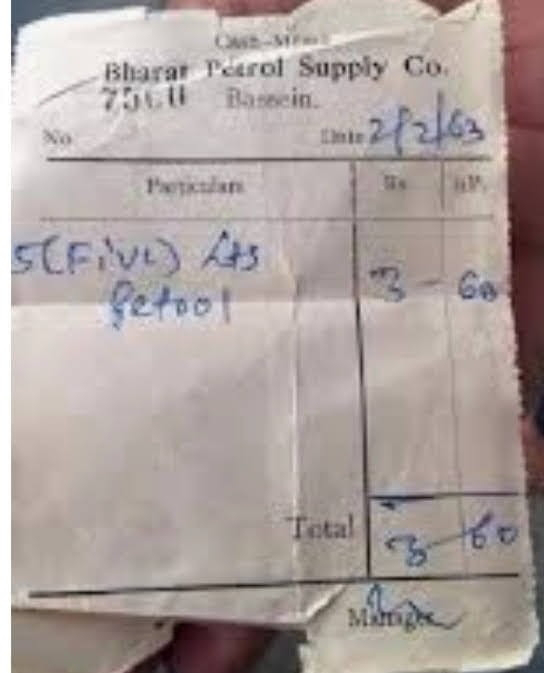
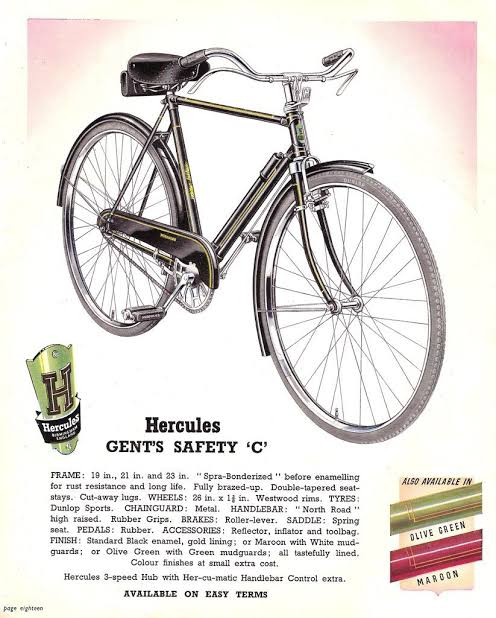
But what is equally interesting is that old people in those days used to grumble that the prices had gone up very high !! And they were right.  Things were far cheaper in 1930s. See the receipt dated  29 Sept 1931 for petrol (see photo). Eight imperial gallons of petrol for Rs.9ans 8 annas translates to 26 paisa a liter of petrol. And,  just as an example of how low-priced things were,  I may mention that my father purchased his first bicycle when he was in his teens in 1930 for a sum of rupees 28 only and the bike was imported from England - the famous  Hercules bike. It came fitted with a belly, a dynamo driven front electric lamp and a red tail light, a carrier, a hand pump, chain guard and bicycle stand.

***

Sunday, 16 January 2022

purchasing power of rupee

The purchasing power of rupee

 I n1963 the price of petrol per litre was 72 paise (see the photo). 1971 one dosa
was for 50p . A cup of coffee was also costing 50p (see the photo). 

Salaries were also low. The  basic monthly pay of an IAS officer in the first year of  service was Rs.400 in the sixties.

 I purchased my Bajaj scooter in 1972 for Rs.3400.

Early Terelyne shirts  were very expensive and I purchased my first expensive terylene shirt (harvest tones) for Rs.28. 

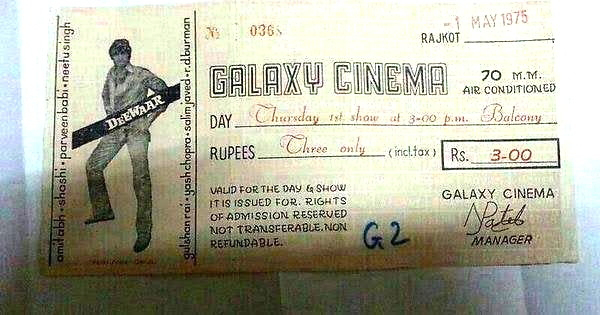
Balcony cinema ticket was around Rs2.25 in 1960s.
For first class the price was
Re 1.25. Even in May 1975 the cost of a balcony ticket was Rs.3 (see photo).
Going still farther back, a Hercules  imported bicycle  purchased by my father in 1930 cost Rs 28and 8 anna. And in 1947 the popular Bareilly chair (see photo) cost Rs.6 .

And the most interesting thing is  that while ghee was four rupee eight anna per ser (933 gm.) and basmati rice Rs 1 four anna per ser (933gm, my grandfather used to observe that prices had gone very high !

( metric system of weights and measures came into force only in 1957 before that it was rupee/anna/pice and Ser/chhatank).

***

Friday, 14 January 2022

India of 1950s

India of early fifties

India was not an Industrial Nation in early fifties . Most  manufactured articles were imported - bicycle, motor cycle, car, radio, pen and even pencils. In my school days one of the popular brands of pencil was yellow in colour and with a small rubber eraser at the other end. It was manufactured in Czechoslovakia and the price was two anna.

Rupee was then a powerful currency . Purchasing power of  rupee was good . For example 100 grams of butter was less than eight anna (50 paisa) and Polson was the most popular butter.

1 kilo of ghee cost little less than 5 rupees. Best quality Badam (almonds) cost Rs.5 a ser (slightly less than a kilo- 933 grams) . A 64 pages good quality copybook cost three annas and  a big loaf of bread was for  4 Anna (25 paise). Ticket for first class in cinema halls was for Rs.1and 5 anna. A good cup of tea cost two anna and a full meal was available for a eight anna or less.

Bicycles were very popular Even senior government officers came to office on bicycles. Bicycle users were required to pay an annual licence fee of Rupee 1 for a bicycle and the metal licence plate was usually inserted in  the front spokes of bicycle wheel . Licence for possessing a radio was also there - 5 rupees per year for use of a radio. Raleigh and Hercules were the popular brands of bicycles imported from England. Very few people owned cars. All  cars were imported - from USA and UK. American cars were big and heavy such as chevrelet, Ford and studibekar. British cars were smaller such as Hillmen and Morris..

 I forgot to tell you that in those days the  rupee consisted of 16 Anna and there were four paisa in one anna. we did not have metric system in those days weight was measured in SER and CHHATANK . There were 16 chhatank in one ser which was  equivalent to 933 grams.

More sometime later . . .

***

Thursday, 13 January 2022

Market blues in early days of independence

The British rule in India robbed India of its own industries to a very large extent. The British were never intersted in industrialisation  India sent raw materials to Britain and imported British manufactured goods . In stead of installing manufacturing facilities in India they preferred to depend on imports from Britain and other European countries for the own benefits. Even ordinary use item like  pencils , nibs for cheap holder pens , biscuits, tinned food items and so many other things were imported from other countries. 

When India become  independent it had to protect its economy. Therefore it became necessary to introduce very heavy custons duty on imported items to save foreign exchange and help india's own industries develop. But development of industries takes time. Meanwhile the result was that there was a crisis of availability of consumer products.

Until shaving razor blades were an imported item. There was not a single razor blade manufacturing  unit.  So when imort was restricted these good quality blades become very expensive  in India. . 7 o'clock and Gillette blades were available for a very high price.  people used to prolong the life of theses blades by using a blade sharpener (available in blue or light green colour).

 As far as I remember the first blade manufactured in India some time in the 1950s was Bharat blade which was available for four Anna's for a pack of 5  blades. It was a very poor quality blade and one needed alum to  rub on the tiny cuts from this blade during shaving.

This was the period when India was in the process of starting industrialisation from a total neglect by British rulers. The first good quality blade became available only in 1966.

I  remember that one day  in  the latter half of 1966 the first good Indian blade hit the market. It was Erasmic Silk Edge blade which was of a quality matching imported blades and it was  not expensive at all.
The price was 50 paise for a pack of 5 blates and in the days following there was a big rush to buy these high quality blades.

Similar is the story of wristwatches.  After independence, due to high customs duty, wristwatches became a very expensive item. By 1967 one had to part with around Rs.300 rupees to buy a standard imported watch (equal to around Rs. 30000  rupees of today). Good quality popular brands of wrist watches became out of reach of common man.

And then in 1967 came the first Indian watch - HMT Janata watch. There was initially a huge rush at the sales points and I remember I purchased my first HMT Janata watch for a family member for rupees 107 and 50 paisa by standing in a long queue at the Patel Chowk GPO building in Delhi.
Today very good quality battery watches are dirt cheap.

The first refrigerator for home use  manufactured by Godrej company was available in 1958  for a price of a little over rupees two thousand which is around 2 lakhs rupees of today. It was very expensive but unlike the fragile refrigerators of today it was an all stainless steel refrigerator and many of the refrigerators of those days of Godrej and other companies were working even after 40 years.

it was only in early nineties  that floodgates for imports were opened in India and suddenly the world was our market  ! Refrigerator was downgraded from the list of luxury items and taxes were drastically reduced. With cheaper components and low taxes refrigerators gradually became cheaper and cheaper and became part of the essential household items  even in lower middle class people.


Sunday, 9 January 2022

डाकिया और मोबाइल फोन की मार

 कुछ आवाजें है जो अब हमे नहीं सुनाई देती है । उनमे से एक आवाज है पोस्टमैन की जो एक खास अंदाज में  आवाज लगाता था - (पोस्ट मन्न) घर पर चिट्ठी डालने से पहले , ताकि घर के लोगों को पता चल जाए कि चिट्ठी आई है।

फिर तो घर के कई सदस्य में दौड़ लग जाती थी कि कौन उठाएगा चिट्ठी।

कुछ दशक पहले तक एक दूसरे से संपर्क का माध्यम चिट्ठी ही था। ढाई आने (बाद में 15 पैसे) का एक लिफाफा होता था ,10 पैसे का अंतर्देशीय पत्र और तीन पैसे का पोस्टकार्ड।  जरा सोचिए 3 पैसे के पोस्ट कार्ड में आप चिट्ठी लिखते थे , यहां से मुंबई में रहने वाले अपने किसी रिश्तेदार को। लाल रंग के लेटर बॉक्स में डालते थे फिर बाद में एक पोस्टमैन आता था और लेटर बॉक्स  से सभी चिट्टियां को निकाल कर एक बड़े थैले मे पोस्ट ऑफिस ले जाता था। वहां  चिट्ठियों की छटाई होती थी। अलग-अलग शहरों के  थैलौं में भरकर रेलवे स्टेशन एक लाल रंग की गाड़ी से ले जाई जाती थी। रेलगाड़ी में भी RMS यानी रेलवे मेल सर्विस का एक लाल रंग का डिब्बा होता था जिसमें सभी  थैले भर दिए जाते थे रास्ते में आने वाले शहरों के  प्लेटफार्म में यह थैले फेंक दिया जाते थे। फिर एक लाल रंग की बस में रख कर पोस्ट ऑफिस ले जाया जाता था। पोस्ट ऑफिस में अलग-अलग मोहल्लों के चिट्ठियों को अलग-अलग मोहल्लों के पोस्टमैन  अपनी साइकिल में लेकर  घरों में डाल दिया करते थे।

यह सब काम के लिए आपको सिर्फ कुछ पैसे ही देने होते थे .

ऐसी ही जो दूसरी चीज अब लगभग गायब ही हो गई है वह है टेलीग्राम । आप लंबी दूरी का सफर तय कर के पहुंचते थे दूसरे शहर में तो वहां से टेलीग्राम करते थे अपने घर को "Reached Safely" और इन दो शब्दों के टेलीग्राम के लिए आपको पोस्ट ऑफिस जाना पड़ता था एक फॉर्म भरना पड़ता था और पैसे देने होते थे। फिर MORSE CODE की मशीन पर आपका संदेश दूसरे शहर को भेजा जाता था जहां पोस्ट ऑफिस के कर्मचारी एक टेलीग्राम फॉर्म में  लिखकर आपके घर पर भेजते थे । 

 आजकल शहर की सड़कों पर लाल रंग के लेटर बॉक्स करीब करीब खाली पड़े रहते हैं टेलीग्राम सर्विस बंद हो चुकी है  मनीऑर्डर भी बहुत ही कम लोग करते होंगे।

 धीरे धीरे पोस्ट ऑफिस का स्वरूप बदलता जा रहा है और डाकिए की परिभाषा भी।

 अखबार और टेलीविजन का भविष्य भी धूमिल हो गया है । 
कुछ हद तक सिनेमाघरों का भी  बुरा दिन आ रहा है। 

अगले कुछ सालों में बड़े-बड़े Malls भी ग्राहकों को तरसेंगे जब अधिकांश लोग अपने मोबाइल का इस्तेमाल करके घर पर ही सामान मंगवा आएंगे - अमेज़न फ्लिपकार्ट , बिग बास्केट जैसी बड़ी कंपनियों से।
  मोबाइल फोन की मार से सभी कुछ बदल रहा है।
***