Total Pageviews

Friday, 13 May 2016

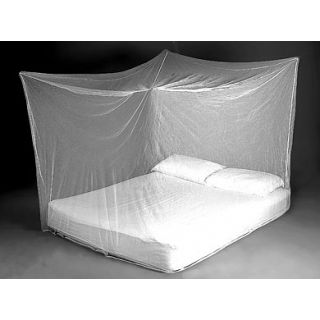
मच्छरदानी में आदमी

कल रात बड़ी समस्या हो गई. मच्छरदानी लगा के सो गया था पर कई बार नीद टूटी. हाथ पैर में मच्छर काट रहे थे.

होता यह है कि अक्सर हाथ पैर मच्छरदानी से चिपके रहते है और मच्छरों की बहार आ जाती है. बाहर बैठे बैठे ही मजे से खून चूसते रहते हैं फ्री फंड का.

पर जब मेरे गाल में मच्छर ने काटा तो मैं चौंका. मतलब.यह हुआ कि अंदर गैर कानूनी तौर पर कोई मच्छर  मौजूद था.

मैने बेड स्विच दबा कर फौरन  लाइट जलाई. देखा कि एक  मोटा मस्त मच्छर अंदर बैठा है.

क्योकि मैं गांधी जी का भक्त हूँ मैने उसे मारा नही. मैने उससे कुछ पूछना ही ठीक समझा.

" तुम अंदर क्या कर रहे हो ?" मैनें गुस्से में कहा.

वह बोला , " उस्ताद , यह मच्छरदानी है और मैं मच्छर हूँ. तुम बताओ कि तुम अंदर क्या कर रहे हो?"

मैं सोच में पड़ गया. बात तो सही कह रहा था मच्छर.

क्योकि मैं अब्राहम लिंकन का भी भक्त हूँ इस लिये बिना बहस किये चुपचाप मैं बाहर आ गया.

सोचता हूँ कि  मच्छर दानी का नाम आदमी दानी होना चाहिये ताकि कानूनी दिमाग वाले मच्छर हमे परेशान न करें.  जब साबुन दानी में सावुन होता है, चूहे दानी में चूहा होता है , सुरमेदानी मे सुरमा होता है तो जब जाली के अंदर आदमी है तो मच्छर दानी नाम क्यो? सोचने वाली बात तो है।

फिलहाल मैनें मच्छर अगरबत्ती का इस्तमाल शुरू कर दिया है।

WISDOM OF THE MASTERS

"THE WISDOM OF THE MASTERS"

We have all been reading about how, thousands of years back , Sanjay watched the great Mahabharata war (apparently on a colour TV) far awsy from the battle field  and kept giving a running commentary to the blind Dhritarastra about the progress of the Mahabharat war..We have been told that the great ancient indians had aeroplanes, nuclear weapons and much more. It is good to feel belonging to a great ancient civilisation.

Unfortunately,  the matter ends there -  in just feeling great  !!

If Thomas Macaulay had said that the total  output of ancient india's sanskrit works  on various subjects was dismal and worth nothing, he was speaking out of total ignorance. The Germans were better. They got hold of priceless sanskrit works , carried them to Germany and got them translated.The world was awe struck at the phenomenal treasure trove of ancient  knowledge.

Leave aside the world, even Indians have little idea about the enormousness of  knowledge buried in ancient texts.The mind blowing information in the ancient SURYA SIDDHANT is a case in point. Hundreds of years before Newton, the ancient scientists had accurately measured distances and movement  in solar system and the universe with astonishing accuracy. Here is just one example:

"The Surya Siddhanta also estimates the diameters of the planets . The estimate for the diameter of Mercury is 3,008 miles, an error of less than 1% from the currently accepted diameter of 3,032 miles".

Incidentally it is the oldest ever book in world which describes earth as sphere but not flat and gravity being reason for objects falling on earth. That was hundreds of years before Newton and his falling apple !!

What we need today is not just FEELING PROUD of our heritage.. We need highly paid sanskrit scholars to translate all our ancient literature, to ferret out the knowledge buried in ancient texts and make it available to the world in the languages of today.

This is not a routine job..These translators should not be  "Assistants"  in a department of  Govt. of India,  with a hierarchy of senior bureaucrats breathing down their neck.That will not  do..They should be emminent sanskrit schlors  drawn from talent pool in the teaching staff of universities.  And they should be given high status, high salary and facilities.

We have wasted almost seventy years since independence  in doing nothing in this direction. It is time we set about discovering ancient wisdom. 

Thursday, 10 March 2016

SATYA. KYA HAI ? (What is the truth?)

"SATYA  KYA  HAI" ?
(what is the truth?)

 
One day the great philosopher Socrates came upon an acquaintance who ran up to him excitedly and said, "Do you know what I just heard about one of your students?"

"Wait a moment," Socrates replied, "Before you tell me I'd like you to pass a little test. It's called the Test of Three."

"Three?"

"That's right," Socrates continued. "Before you talk to me about my student let's take a moment to test what you're going to say.

The first test is Truth. Have you made absolutely sure that what you are about to tell me is true?"

"Oh no," the man said, "actually I just heard about it."

"All right," said Socrates. "So you don't really know if it's true or not. Now let's try the second test, the test of Goodness. Is what you are about to tell me about my student something good?"

"No, on the contrary..."

"So," Socrates interrupted, "you want to tell me something bad about him even though you're not certain it's true?"

The man shrugged, a little embarrassed.

Socrates continued. "You may still pass though, because there is a third test - the filter of Usefulness. Is what you want to tell me about my student going to be useful to me?"

"Well it....no, not really..."

"Well," concluded Socrates, "if what you want to tell me is neither True nor Good nor even Useful, why tell it to me at all!"

The problem with our human race is that we are news mongers. It starts with the first cup of morning  tea when we pick up the newspaper and get brainwashed. And then there is the bombardment of a hundted TV channels, each presenting its own version of the TRUTH.Everything there is supposed to be true. An advertiser claims that his brand of toothpaste is better than the rest. Years later we find at our cost that it was not true. Same thing with claims about tonics, snacks and houses on sale and other things. And to confound the matter celebrities are roped in to drive it into your memory cells that truth, and nothing but the truth, is being told. No legal responsibilities fixed on celebrities . And we just remember the falsehoods of  Goebbel !

Even the BBC is now suspect ! Read this:

http://www.independent.co.uk/news/uk/politics/bbc-accused-of-telling-more-half-truths-and-lies-than-the-nazis-at-snp-conference-a6697761.html

The age of internet is a nightmare. You type something absolutely false and with a click it spreads faster than wildfire across the world. A simple,honest, peace loving citizen does not know what to believe.

That reminds me of a poem by  one of our most respected leaders. Here it is :

                        सत्य क्या है ?
                          यक्ष प्रश्न
            ~ अटल बिहारी वाजपेयी

-------------------
जो कल थे,
वे आज नहीं हैं ।
जो आज हैं,
वे कल नहीं होंगे ।
होने, न होने का क्रम,
इसी तरह चलता रहेगा,
हम हैं, हम रहेंगे,
यह भ्रम भी सदा पलता रहेगा । . . . . .

सत्य क्या है?
होना या न होना?
या दोनों ही सत्य हैं?
जो है, उसका होना सत्य है,
जो नहीं है, उसका न होना सत्य है ।
मुझे लगता है कि
होना-न-होना एक ही सत्य के
दो आयाम हैं,
शेष सब समझ का फेर,
बुद्धि के व्यायाम हैं ।
किन्तु न होने के बाद क्या होता है,
यह प्रश्न अनुत्तरित है ।. . . . . .

प्रत्येक नया नचिकेता,
इस प्रश्न की खोज में लगा है ।
सभी साधकों को इस प्रश्न ने ठगा है ।
शायद यह प्रश्न, प्रश्न ही रहेगा।
यदि कुछ प्रश्न अनुत्तरित रहें
तो इसमें बुराई क्या है?
हाँ, खोज का सिलसिला न रुके,
धर्म की अनुभूति,
विज्ञान का अनुसंधान,
एक दिन, अवश्य ही
रुद्ध द्वार खोलेगा।
प्रश्न पूछने के बजाय
यक्ष स्वयं उत्तर बोलेगा ।

****
Thursday, 3 March 2016

MAYA -The deception

" MAYA - the deception"

We were in a moving train.The boy must have been four year old. He was quite excited..This was perhaps the first time he was having a train ride and he was thoroughly enjoying it.

The boy had just peeped out of the train's  window when the train was moving over a level crossing. One moment the waiting road traffic was far ahead of the window. The next moment it had swept past and gone.

The boy wanted to know why these waiting cars and trucks had rushed past us when they were not moving. His father tried unsuccessfully to explain it to him and, after a succession of questions from the boy, he slapped him hard.

I felt bad. Not because the boy got slapped. He was in any case born to get a lot more beating later in school soon. Those were the salad days of school masters - "spare the rod and spoil the child."  I felt sorry because a Fundamental Question had been raised and  remained unanswered : The WHY of this relative, deceptive, world.

You see the Sun rising in the east in the morning. Well it is not rising. It is a perfect case of deception. It is, as a matter of fact just the other way round. You are in fact moving and the irony is that you can't feel it.. . . . . You see a bright star in the moonless dark sky at night. Well it is quite likeky that it is not there at all now. If it is five hundred light years away that means that what you are witnessing was there five hundred years back - that is, before Babur came to India..  The star may have disintegrated a long time back. . . . . . You lie in your cot under the soundless stillness of a  starry night. The silence is there because you cannot hear that deafening cosmic noise, because your range of hearing is very limited. A normal ear will hear sounds only within the range of 20-130 db though the universe is far  too noisy and  constantly exploding. And to stretch the facts to an eerie level, there may be, as you read this blog,  persons from another planet sitting right next to you  in your room, watching you. You power to "see" is also limited to the range of spectum known as VIBGYOR and you would not see them if they are in vibrations outside this range.

Javier Sotomayor (Cuba) is the current men's record holder with a jump of 2.45 m (8 ft 0 1⁄ 4 in) set in 1993 – the longest standing record in the history of the men's high jump. But on the surface of the moon even a kid can break this record because a high jump is also relative to the gravitational pull.

It is all RELATIVE !

There is an anecdote of Einstein explaining his theory of relativity to a layman. It was printed in “The New York Times” in March 1929 :

“When you sit with a nice girl for two hours you think it’s only a minute, but when you sit on a hot stove for a minute you think it’s two hours. That’s relativity.”

The ancient people of India had, not without reason,  called this world  a web of deception  - MAYA !


***

Tuesday, 1 March 2016

THE PROBLEM WITH APPLE

"THE PROBLEM WITH APPLE"

It was the year 1666 C.E. The plague had closed many public buildings and meetings. Newton had to leave Cambridge. He shifted to Woolsthorpe Manor, near Grantham in Lincolnshire, the house where he was born, to contemplate the stellar problems he had been pursuing at the university.

He was sitting under a tree obsessed with the problem of the orbit of the Moon around the Earth and the influence of gravity.

And then that Apple fell on his head! And the students of physics got an additioal "LAW " to cope with :

" . . . . that any two bodies in the universe attract each other with a force that is directly proportional to the product of their masses and inversely proportional to the square of the distance between them. " (Demands quite a fine- tuning of mind to grasp the meaning!)

I find apples creating problems everywhere. ADAM, the first man on planet Earth, soon got into serious trouble after eating an apple. He was thrown out of the garden of Eden after he shared one with Eve. He should have avoided eating it. He had clear instructions  There were other fruit trees too and there was no ban on eating any other fruits. He could have eaten an Alfonso mango or a banana. And see how the humankind now  suffers the curse for that solitary apple. There seem to have been no curses on the human race before Adam and Eve disobeyed. (Well there was no human race for that matter!)

You know the story of "Snow White and the Seven Dwarfs". The apple is here too. Just to make you recall it with ease here is an excerpt:

" . . . .After turning into the Witch, the
Queen declares that Snow White should suffer "a special sort of death". Looking through her spellbook, she comes to the recipe for the Sleeping Death, and, reading of the poisoned apple's effects, decides that it's the perfect way to get rid of her . . . ."

The question here is " Why an apple? why not a pineapple ?" . And the  answer is that Apple creates problems. Elementary Dr. Watson!

Talking of these medical chaps  called "doctors", apple has been declared a threat to their profession. Remember what your Grandma had told you : AN APPLE A DAY KEEPS THE DOCTOR AWAY! I I am not very sure about the other "doctors" -  the PhD and D.Litts - but I guess their families also avoids eating apples to be on the safe side. I know atleast one management professor  whose wife eats a lot of apples. For a long time now, he has been on peripatetic lecture tours !

And now the smartphone company that fell in love with Apple is also in trouble. See this report:

"Crunch time for Apple as it prepares for face-off with FBI"

What might happens at this week’s congressional hearing as the iPhone maker continues to defy last month’s court order over phone encryption?

New York police officers on guard outside the New York Apple Store last month as the company’s battlewith the US government rages. ---

Sam Thielman New York and Danny Yadron San Francisco
Saturday 27 February 2016
(The Guardian) 

And that blessed Globe Theatre script  writer known as Shakespeare maintained that names did not at all matter !!

“ What's in a name? that which we call a rose
By any other name would smell as sweet.
(William Shakespeare , Romeo and Juliet)

But ofcourse he was a smart guy. He avoided mentioning Apples except inadvertently in "Hamlet.


THE PROBLEM WITH APPLE

"THE PROBLEM WITH APPLE"

It was the year 1666 C.E. The plague had closed many public buildings and meetings. Newton had to leave Cambridge. He shifted to Woolsthorpe Manor, near Grantham in Lincolnshire, the house where he was born, to contemplate the stellar problems he had been pursuing at the university.

He was sitting under a tree obsessed with the problem of the orbit of the Moon around the Earth and the influence of gravity.

And then that Apple fell on his head! And the students of physics got an additioal "LAW " to cope with :

" . . . . that any two bodies in the universe attract each other with a force that is directly proportional to the product of their masses and inversely proportional to the square of the distance between them. " (Demands quite a fine- tuning of mind to grasp the meaning!)

I find apples creating problems everywhere. ADAM, the first man on planet Earth, soon got into serious trouble after eating an apple. He was thrown out of the garden of Eden after he shared one with Eve. He should have avoided eating it. He had clear instructions  There were other fruit trees too and there was no ban on eating any other fruits. He could have eaten an Alfonso mango or a banana. And see how the humankind now  suffers the curse for that solitary apple. There seem to have been no curses on the human race before Adam and Eve disobeyed. (Well there was no human race for that matter!)

You know the story of "Snow White and the Seven Dwarfs". The apple is here too. Just to make you recall it with ease here is an excerpt:

" . . . .After turning into the Witch, the
Queen declares that Snow White should suffer "a special sort of death". Looking through her spellbook, she comes to the recipe for the Sleeping Death, and, reading of the poisoned apple's effects, decides that it's the perfect way to get rid of her . . . ."

The question here is " Why an apple? why not a pineapple ?" . And the  answer is that Apple creates problems. Elementary Dr. Watson!

Talking of these medical chaps  called "doctors", apple has been declared a threat to their profession. Remember what your Grandma had told you : AN APPLE A DAY KEEPS THE DOCTOR AWAY! I I am not very sure about the other "doctors" -  the PhD and D.Litts - but I guess their families also avoids eating apples to be on the safe side. I know atleast one management professor  whose wife eats a lot of apples. For a long time now, he has been on peripatetic lecture tours !

And now the smartphone company that fell in love with Apple is also in trouble. See this report:

"Crunch time for Apple as it prepares for face-off with FBI"

What might happens at this week’s congressional hearing as the iPhone maker continues to defy last month’s court order over phone encryption?

New York police officers on guard outside the New York Apple Store last month as the company’s battlewith the US government rages. ---

Sam Thielman New York and Danny Yadron San Francisco
Saturday 27 February 2016
(The Guardian) 

And that blessed Globe Theatre script  writer known as Shakespeare maintained that names did not at all matter !!

“ What's in a name? that which we call a rose
By any other name would smell as sweet.
(William Shakespeare , Romeo and Juliet)

But ofcourse he was a smart guy. He avoided mentioning Apples except inadvertently in "Hamlet.


Saturday, 27 February 2016

THE BUSINESS OF DREAMS

"The business of Dreams"

Last night at 3 am I woke up half way through a  dream. That usually happens with me now as part of the  aging experience.

At that moment (that is, when I woke up) I was trying in my dream to locate someone I had abruptly lost as I  was walking side by side with him,  chatting pleasantly, on a safe but lonely stretch of a rocky hilly path.

That person happened to be  Aamir Khan, the bollywood actor ! 

So when  I suddenly woke up and  Aamir Khan disappeared I felt bad. Just before that talk-and-walk with him,  I was eating a 'maska-pav' (bun with a liberal amount of fresh butter) at a street food stall. He had not joined me. We had stopped on spotting a small chai shop. I crossed the path and went to the tea stall while he patiently waited for me on the other side of the road, both hands deep in his trouser  pockets, reclining against a wall and he waited for me to finish my eating. 

I  paid for the muska-pav and then we were again walking uphill on this rocky path, happily chatting, when he suddenly disappeared. I started searching him . . . and then I woke up with a  start. . . .

My dreams baffle me and many of these dreams are not pleasant.  why do we dream at all when we sleep! And why are some of the dreams so problematic ! 

Sigmund Freud’s theory of dreams suggests that dreams are a representation of supressed unconscious desires and motivations. But this particular dream did not fit into his theory. I think I dreamt this dream because I was watching a part of the film "Three Idiots" last evening. There is another theory that maintains that dreams are a subjective interpretation of signals generated by the brain during sleep.

We dream throughout life in what is known as the Rapid Eye Movement (REM) stages of sleep. According to a theory, circuits in the brain become activated during REM sleep, which causes areas  involved in emotions, sensations and memories to become active. This results in dreaming.

Mercifully almost all dreams get erased from memory moments after our waking up. But some dreams persist. I still recall a dream of a fat young girl with a very chubby face role-playing bhagwan (lord) Sri krishna (standing cross-legged and playing flute) in one of the interludes in a circus. I was then  five year old  and had visited a circus for the first time in life. I might have  been deeply moved by an altogether new experience of outside world - so the dream must have got engrained.

Writers often spin their stories around dreams. Shakespeare did so with abandon and so did many others. Yes, from ALICE IN WONDERLAND to HARRY POTTER AND THE ORDER OF THE PHOENIX they have blazed a trail of adventure woven in dreams.

And yet it was a haunting one-liner about dreams that had impacted me the most :

“Last night I dreamt I went to Manderley again . . . . . . So began the unforgettable classic 20th-Century suspense novel REBECCA of the inimitable Daphne du Maurier . . . taking us on to a journey of intense drama and intrigue !

***

Thursday, 4 February 2016

BLAST FROM THE PAST

"BLAST FROM THE PAST"

Buy a Railway platform ticket and enter platform no.1. Take a stroll  from one end of the platform to the other end, viewing every thing, everybody..

Are you missing something that was a common sight a long time back? Yes you are !!

It's the bulging big khaki "HOLDALL" !

It was made of tough canvas cloth, pale green or khaki in colour. Three feet wide,  six feet long when unrolled. Deep-closed two ends where you tucked in the pillows, towels etc. Three feet long open area in the middle with full flaps on both side to wrap the open portion securely. It would carry a bedding - gadda, a couple of small pillows, a bedsheet, a blanket and quite a few other items including the ones you could not pack into the suitcase or the trunk. Bigger the family, more the children, bigger the packed stuff in the holdall.,


And then the overstuffed holdall posed a CHALLENGE ! How to roll it up and close it securely. And buckle  the leather straps securely!

YES. It had to be rolled up to close it and then buckled shut with the two  tough long leather straps. You sweated and managed to roll it up but as soon as you stretched a hand to get the ends of the leather strap it would loosen up again!

Enter the Kids! Yes that's right. They would be watching you toil.. They were a great help. And they were expecting to be called in ultimately to help!!

As soon as you rolled it up again, the kids instanly sat upon it  to prevent it from loosening - giggling and enjoying the "fun"!  Now you could wipe the sweat off your forehead and  buckle up the straps.

In those days usually a big black steel trunk was also there to keep company with the holdall if the family was travelling.

In north India the best trunks in the days of my grand parents were of the famous R.C Brothers, chowk, Allahabad. Totally rust proof and tough.

As you arrived outside the railway station, the red shirted coolie would be  there to pick up the trunk, hoist it on his head and the holdall on top of it.

He carried the massive burden to whatever platform you had to go.  Just for fifty paise !!

Once you were settled inside the compartment after locating your reserved berths,  you would unroll the holdall on a reserved berth—that would transform the berth  into your prime territory throughout the journey. Then you would distribute beddigs for your other berths.

And if it was the dinner time when the train hissed out of the station, tiffin careers of various sizes would soon materialise out of wicker baskets all over the compartment, filling the air with the irresistible aroma of  poori, paranthas fried vegetabes and pickles!!

And the steam engine would happily carry you all, and countless holdalls,  through the dark wilderness towards your destination!

BON VOYAGE !!

*****

Steam engine

Tuesday, 2 February 2016

BICYCLE TIMES

"BICYCLE TIMES"

HERCULES, the sturdy bicycle, cost about twenty eight rupees in nineteen thirties That would be about six dollars or two British pounds of those days. They were "MADE IN ENGLAND". There were other brand names roo.

The days of  British raj in India were the salad days for manufacturers in England. India was (in MBA language) a captive market - an assured big market.

So most cars  were British make. And all the bicycles too. The cars were usually small - Morris, Austin or Hillman. There were a few noisy T-model fords too. The  rich were still maintaining Tumtums (closed horse-drawn box carriages) until late forties. For others there were Tongas for hire.  The poor used cheaper uncomfortable Ekkas (jhatka). Cycle rikshaw became common only in the fifties.

The rich and the common men both kept a bicycle, usually a Hercules.   Our dashing young family doctor (ex)Capt. Sinha used to come to our house in a shining dark green  bike complete with a dynamo electric  light, a deluxe bell, a pump and a full chain cover. It was a treat to watch his noiseless shining dark green bike reflecting the Sun's rays as it came along crunching the red-gravel over our driveway.

As a kid I learnt cycling on a bike that my father had acquired in early thirties as a student. Lot of others too used this sturdy bike to learn cycling. As a kid, short in height, it was difficult for me to mount the seat. So I used to do what was popularly known as KAINCHI (scissors) style paddling. The right leg was put across the main frame to get to the right paddle.

The first time I found balance and got moving continuously without falling was a magic  "Newton's apple" moment of discovery! Riding a bike then became fun and freedom!!

The most coveted jobs were in the government. The luckier ones got into state civil service - PCS in short. These PCS chaps were the "brown sahibs"- they acquired decent tweed coats, three piece suits, a tennis maxply racquet, a better brand of cigarettes, the best quality  "Sola hats" (photo) and a well maintained new  bicycle. When  world war second started, petrol became scarce and bicycles even more popular - for office, clubs and everywhere.

The best brand of cigarettes was 555 State Express. Gold Flake came next. The middle class smoked Scissor's  or cavender's in packs of ten. Panama cigarettes in pack of twenty came later. Poor people smoked Bidi, the most popular brand being "Pahalwan chhap bidi".  Almost all adult males were smokers. They smoked inside the cinema halls too! All cinema halls had proper bicycle stands where one could deposit the bicycle for safe keeping while watching a film in the cinena hall. Money saved in transportation went up  in smoke!

"Sahibs" in British days were of two species - the brown ( Indian) and the white (British). Different food, different cultures, different lifestyle, different clubs. But both species had two things in common - the now forgotten sola hats and the british bicycle.The Sola hats kept the head cool in the fierce summer months.

Lot of stories have been woven around the Sahibs and their styles of rule. Books such as in the link below will take you back into those times:

https://books.google.co.in/books/about/The_Men_Who_Ruled_India.html?id=w4zTPQAACAAJ&redir_esc=y

For people moving up in social ladder a club was a must. Clubs had tennis courts, billiards rooms, playing cards tables etc. and ofcourse a cafetaria. A play corner for kids with merry go round, seesaw, slide-downs etc. was also usually there. In the portico area of clubs one could spot an Austin, a Morris or a Hillman car and a plethora of bicycles - all british made.

That was 'once upon a time'. . . . . ! Those were the bicycle times. No smog. No noise. Fresh air. A clear night sky where you could locate "Orion Hunters" or even "The Kite" constellations on a moonless night.

It is good to see that  bicycles are again coming back into fashion.  There are now  designer bikes too for the rich. Separate bicycle lanes are being laid down in many cities to encourage safe cycling. May be, the days of less automobiles and more bicycles will follow. "Twinkle Twinkle Little Stars" and the glow worms (fireflies) will then come back once again!


Tuesday, 19 January 2016

THE LANGUAGE DILEMMA

An Englishman in Europe or a person from north India in the south, using words which are of innocuous common use in their own language might just start a fight when they use them  while visiting some other states . . . . you might even end up behind bars for saying something harmless. And you would  be wondering why! And, vice versa, it could be so with some the people of other states visiting your place !

Here are some words having an altogether different meaning in another region (In India and in Europe)

1)MOTA -Fat in hindi  means  ELDER BROTHER in gujrati.

2) KUNDI (in hindi for a Bolt in doors)  means  BUTTOCKS in malyalam & tamil.

3) TOPI (cap in hindi)  means a in  CHEAT kannad.

4) Ammi(mother in hindi)  means a girl's BOSOM in kannad .

5) MUNDA (for a boy in hindi, punjabi)  means a PROSTITUTE  in telugu.

6) DENGE - देंगे (in Hindi means “will give”). In Telugu  it means f*** !!

7)TERI : in hindi it means yours  but in Malayalam, it means abuse/bad words.

8) CHOR (thief in Hindi)  refers to rice in Malayalam!

By the way RANDI (meaning a prostitute in hindi)  means “Please come” in Telugu. So imagine an unsuspecting Telugu man saying Randi to a woman waiting at the door to be invited in. He would get into very serious trouble indeed !!

So  it is with a Britisher visiting Europe. He is going to have trouble with words  such as PRESERVATIVE, FART, BRA, KISS, GIFT etc

* Preservative : many European languages have variations of
preservative that all mean condom.

*Kiss :  has a more juvenile meaning in Swedish – pee . Simple, yet amusing!

* In German, a gift is not quite as pleasant as in English – it means poison !

*fart in Polish means  good luck !!

*bra in Swedish means  good !

You can add more words in "comments"!!

Tuesday, 29 December 2015

PHIR KYA HUA? (What happened next?)

The place was Bhopal. The year was 1966. It was  a very pleasant evening and I had just come out of a picture hall after watching a movie in the afternoon show.

I was on a short visit to Bhopal. A  Bengali friend  had accompanied me to Bhopal and to this movie. Having spent all the time since birth inside Bengal,  he then knew very little of hindi but was in the process of picking up phrases .

"So! " I smiled at my bengali friend, raising my eyebrows, as we sat across in a restaurant for a cup of tea after coming out of the theatre.

" Phir kya hau? " he shot back, as he lowered the cup of tea from his lips and chuckled.

" But do you know the meaning of PHIR KYA HUA ?" I asked.

" Ofcourse I know! It means 'what happened next' ", he replied, "That  dancing girl was telling a story in the song and a funny looking villager had asked this question since the girl had paused while singing" he said.

That was exactly so. The film was "MERA SAYA", the song was "phir jhumka gira re Bareili ke bazaar me" and the dancer was the talented star of the sixties, film star Sadhana.

On twenty fifth december 2015 Sadhna Shivdasani went the way of all flesh, never to come back, leaving behind memories and so many wonderful films.

 It was a non-event for most of the national newspapers. She had been forgotten.

"Mera Saya" was a milestone in the history of bollywood. It became a superhit. The acting of Sadhna and, that most under-rated of vastly talented actors, Sunil Dutt, were incredibly perfect. It was the golden age of Cinema both in Bollywood. So many high quality films with great acting, great music directors, great singers and great lyricists. It was the best of times for Bollywood.

Unfortunately the last days of Sadhna make a painful statement about the reality of life and the consequences of not planning one's life properly. In the last years of her life sadhna was all alone, her husband having died of chest infections long time back. she had no children of her own. Bollywood had deserted her completely - except for a few friends like Helen, Nanda, Waheeda Rahman and Asha Parekh.And a most surprising thing was that Sadhna was without a house of her own even after a long money-minting career and was living in a portion of a bungalow owned by another film celebrity. During her last years she had been fighting a debilitating illness and a string of  court cases with the property owner and other tenants.

That recalls the advice Ashok Kumar had given to one of the character actors of his salad days. This character actor, inebrieted with success, was squandering money. "Don't squander the money that you are making now." Ashok kumar had reportedly said, "Your first priority should be to save for a house in Bombay as you don't know how long your film career would last". Golden advice! And the immensely successful Sadhna and her husband failed to take this basic step for future security. In this respect shyama, a successful star of 1950s, was very wise and practical and had invested money in property and other securities with the result that she had a very comfortable life beyond her acting years .

Nevertheless Sadhana left behind footprints in the sands of time. She was one of  the greatest natural actors and in the company of other great natural actors she gave us unforgettable films. One such film was  "PARAKH". There where so many more Too.

Thursday, 17 December 2015

THE YEARS OF CONTRADICTION

THE YEARS OF CONTRADICTIONS

"It was the best of times, it was the worst of times, it was the age of wisdom . . .  "

That was Charles Dickens of course, a long time back into history - the opening lines in the novel 'A tale of two cities'.

And yet that was so in early years after India's Independence too!!

Yes, those were the best of times! Those were the days, in the fifties, when pure ghee, cooking oils and butter did not require Agmark certificates of purity. . . When loaves of bread were well baked and had no preservatives or chemicals added to them . . . . when all crops were natural and Organic. . .  when there were no pesticides in food or drink or in river waters . . .when pure journalists like Durga Das, Chalpati Rao needed no certificates for their classic honest journalism . . . when the  politicians were not surrounded by gun-totting black cats nor were there any traffic holdups on account of movement of VIP politicians . . .  when the sounds of jackals' howling came from the nearby forests and not from the sirens of VIP cars rushing down the roads across red traffic signals . . . . when there were no such things as black money  Swiss bank accounts so far as India was concerned. . . . when there were no mass hysterical fan clubs for any sport persons or other celebrities . . .  when sportsmen were not disdainfully rolling in mountains of money . . . . when unassuming famous people like Gama Pahalwan and Dhyan Chand were  household names. . . when the likes of Vinoo Mankad and Polly Umriger were  simple down-to-earth lovable celebrities. . . . when the likes of Dilip Kumar were not minting money by  selling hair oil or junk food or soft drinks  . . . when the  motivated, TRP obsessed, media was altogether missing. . . . . when entertainment meant going for a picnic in open air or a visit to a circus or an exhibition. . .  when there were lots of open fields  and a circus or an 'exhibition' were an annual feature of  town life.

Yes we loved open air, sunshine, starry skies, long walks on neat and clean traffic less roads with an occasional vehicle slowly approaching, blaring horn.

The town where I spent my childhood was quite small in those days. There was no underground sewer line system and therefore no cokroaches. We did not know what a cohroach looked like !  We only read about them in enlish novels - they were supposed to be in cities like New York and we never saw one !

Yes, that was indeed  the best of times. . . . !

And yet those were the worst of times too . . ! With heavy import restrictions shaving blades had suddenly disappeared . . . safety razors too.. Unless you were prepared to spend a fortune on smuggled  foreign-make blades and safety razors, you had just one brand of blades- BHARAT blades - and no safety razors worth any use. And those Bharat blades were just slightly better than a new kitchen knife. They drew blood. Therefore two thing, now no longer seen, were in every man's shaving kit - a slab of alum ('phitkiri' in hindi) to rub on the numerous daily morning cuts . . and a translucent blade-sharpner made of pale green glass!

And so was with other things too. Imported tinned food such as Quaker oats and craft cheese had been substituted with substandard brands. Timepieces became too expensive. Since we had very few good Indian products  other than woollens, butter and shoes, suddenly there was scarcity of many items (we had world class shoes by FLEX, world class butter of POLSONS brand and world class LAL IMLI MILLS
-Legends in the field of worsted and woollen Products-
but they steadily languished). A sudden crisis of sorts was created due to import restrictions. Under the "socialistic pattern", there was initially little interest in import or manufacturing of  essential every day consumer products like safety razors, blades, pen nibs, pencils . . . . It was.a licence permit raj. Private sector was supposed to be anti-people.

It took twenty years for independent India to give us the first decent shaving blades. I still remember the day in 1967 when Erasmic silk edge blades hit the market. And what a rush there was to buy them !  About the same time came the first wrist watches - HMT brand public sector watches. They were few and we had to stand in long queues to buy one. And so with scooters and cars. You had to book one and then patiently wait for many years to get it.

Much later, the demise of Soviet Union was a game changer. Suddenly the world became unipolar. There were no takers for "socialistic pattern". And then came Narsimha Rao, the now forgotten Prime Minister of India. And, as they say, rest was history !!

***


Tuesday, 29 September 2015

GONE WITH THE WIND

GONE WITH THE WIND

It is amazing how popular items of everyday use disappear over  the lifetime of a person.

There was a time when almost every household kept a small bottle of tincture-iodine or spirit. If you hurt yourself while playing or in house-work - a minor cut or abrasion with a bit of bleeding- it was this stuff that you dabbed with cotton wool on the bruise as an antiseptic. And as it gave you hell of a burning sensation, you danced for a while with a musical yelp after it touched the wound. Even some films had that dancing yelping scene (Saira banoo in film JUNGLEE for instance!). Tincture iodine has disappeared.

Doctors, in the days gone by, did not send you for diagnostic 'tests' as a matter of routine.

Our Dr. Sinha from my childhood days had  his 'Modern Clinic'  close to our house. Whenever my father took me to his clinic, I would climb a  stool, which appeared a bit high, and he would sit across and examine me  -  my pulse,  nails, tongue,  eyes, the lower eye lids. He would examine my throat in torch light and would tap below my knee caps to see knee-jerk reaction.

I would then lie down on the leather coach and pull my shirt up. He would tap the entire chest with  'knuckles and fingers'. He would also probe the liver region with his fingers. It hurt sometimes!

I do not see such examination now a days.

He wrote his prescription with a blue holder-pen, picking it up from a transparent glass ink-stand and dipping it in the blue ink-well. He passed this paper to the compounder in the adjascent room through a cute little  semi-circular 'window'. I would usually get one small bottle of a 'mixture' with doses marked with a vertical white strip of paper. There were paper wrapped individual small doses of some powders too.

Antibiotics and a horde of patent medicines, and an army of 'medical representatives', came later and they knocked the blessed compounders out of their jobs!

Now a days  there are hardly any General Practioners seen. Everyone has become a specialist and is mainly concerned with his part of human body. You are usually referred to other specialists for other parts - a sort of continuous medical musical-chair!

There were no ball-point pens in those days. Good fountain pens were unbelievably smooth. These 'silky' writing instruments  were expensive.  Dr sinha too had a gold cap Waterman's pen in his shirt pocket but used ordinary holder-pens for writing prescriptions.

Blotting papers, another item not seen now,  were in use in those days for absorbing extra ink that did not quickly dry. There were all sorts of beautiful blotter  cards. These postcard-size blotter cards had  a glossy nice picture on one side and the blotting paper on the otherside. Every doctor got a good stock of them from leading pharma companies as part of brand-promotion and we would get them free for use in our school. We always wrote with holder-pens using pink colour copper G- nibs and we constantly used blotters. There was a brass ink-well on the upper right corner of each desk in the school.

Fountain pens were, then, very expensive , an ordinary pen costing over Rs 500/- in today's value. The cheapest of the good pen, like Sheaffers, Parker or Waterman's, were well over Rs 8000/- in todays value!

Tincture iodine, fountain pens, ink-wells, holder-pens and blotter cards are not the only things which have passed into history.

Senior citizens would recall a very common item of stationery in use then -  the COPYING PENCIL. This pencil, which made water purple when the tip was wet,  had a very hard and strong lead (graphite) stick. The lead tip would not break even when writing over a number of sheets, with carbon paper in between. Yes it was used for manually making carbon copies of letters and must have come into use  before cheaper typewriter became available.. They were in the market, and in use in offices, till the sixties.

Table clocks  (The winding ones) have also disappeared. Westclox was cheaper and popular but the better ones were German clocks. Wrist watches were  Swiss-made and a standard one used to cost over twenty thousand in today's rupees. Unlike the highly accurate but inexpensive quartz watches of today, the clocks and watches lost or gained time over a month  and had to be time-set once in a while. People used to set the time with the time-beeps before the All India Radio news or the gongs of Big Ben before the BBC news. We had to 'wind' the wrist watches and clocks everyday before going to sleep.

If you visit any old houses in north India you will notice that most of them had a fireplace in the drawing room with an ornamental cornice above it. And these houses had two chimneys - one on the drawing room roof and the other on the roof above the kitchen. These chimneys, which were for smoke from burning coal or wood to escape into the sky, are not seen now. Firewood has passed into history with the popularity of cooking gas and electricity. The once popular PETROMAX COOKING-STOVES have also disapoeared!

And, finally, consigned to the dustbin of history is the once popular TELEGRAPHIC 'quick' message service of post offices. Any message that was to be urgently communicated was sent by a telegram. You paid according to the number of words  used and it was pretty expensive. Telegraphic service started more than a hundred years back with the Morse code (gutt - gutt - gurr - gurr) and, later,  the telex printers. As nobody sends a telegram now due to the instant messaging internet services, this service has also gone with the wind  into the dustbin of history! Memories remain!

*****

****

Friday, 18 September 2015

"The Exact Time"

"MEASURING TIME"

We all like DEFINITENESS. If someone asks me to name the highest mountain I know that there is a definite answer even if I may not know it. So it  is for the number of days in a year, number of hours in a day, the circumference of the earth and so on. You can find it all in a standard general knowledge book.

But in the world of  science there are at times no final answers.

I asked myself a question : "what is the tiniest thing in nature ?".

Once, (in the ancient times of the recorded history), a grain of sand was considered the smallest of all.

Then the atom was discovered.  It was thought smallest and indivisible. But, as I had  observed above there are no final answers in  nano science. The atom was soon split to reveal protons, neutrons and electrons inside. These seemed like fundamental particles, the final answers. But that was  before scientists discovered that protons and neutrons are made of three quarks each. I think there the matter rests at present.

There is a lot of truth hidden in the ancient scriptures. As swani Vivekanand had put it these books contain great truths camouflaged in lot of chaff. We need intelligent translations of such books. Western scholars in the nineteenth and early twentieth century translated many books of Sanskrit. There is need for much more.

Do you know the smallest measure of time ? The details given in vedas are mindblowing. Here is an example:

https://en.m.wikipedia.org/wiki/Hindu_units_of_time

Monday, 13 July 2015

हम ठहरे

"हम ठहरे" 

दाज्यू तुम तो हो देसी पहाड़ी
दाज्यू असली पहाड़ी  हम ठहरे।।

देखा क्या तुमनें कभी है शीशूँणा ?
छूओगे तो भाँगड़ा तुम करने वाले ढहरे.

तुम तो इजा को कहते  हो मम्मी
पर हम पक्के इजा बौज्यू वाले ठहरे ||

तुम कुरसी और मेज में खाते हो खाना
हम तो अटाली में खाना खाने वाले ठहरे ।।

क्वीड़ पाथना  कोई हमसे तो सीखे
हम जो पहाड़ो में रहने वाले  ठहरे ।।

मडुवे की रोटी हैं खाते घी गुड़ से
तुम तो मैगी और पीज्जा वाले ठहरे ।।

सभी को खिलाते हैं खाना हम दाज्यू
काले कउआ तक को खिलाने वाले ठहरे|

हम बूंदी का नकली रायता नहीं  खाते
राई खीरे का रायता खाने  वाले ठहरे।।

हरियाला में आऔ हमारे घर दाज्यू
सींगल आलू गुटुक खिलाने वाले ठहरे||

गैरसैड़ँ राजधानी नि बन सकों दाज्यु
देहरादून का कचरा निकालने वाले ठहरे||

(गिरिजा नंदन जोशी)